
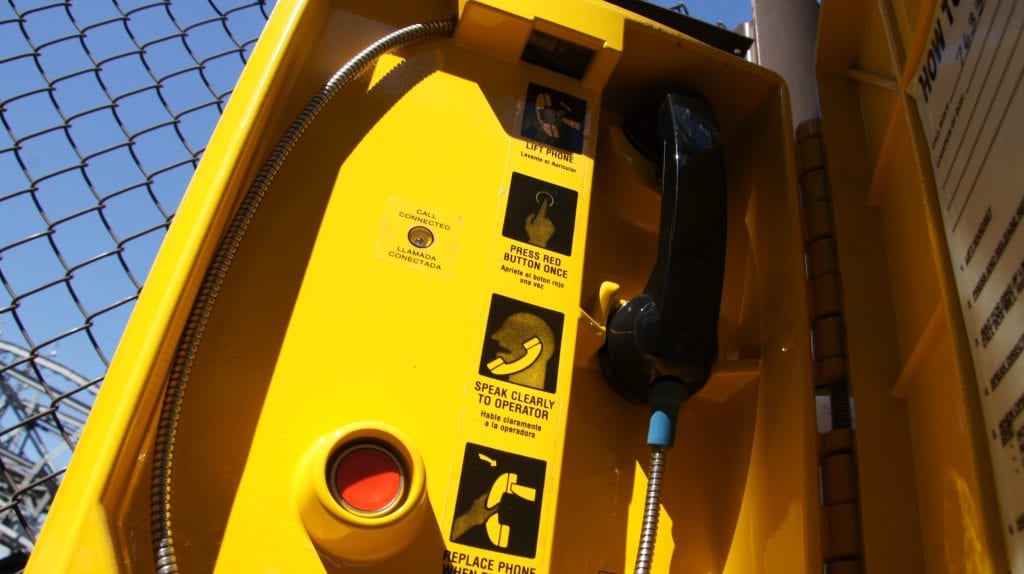
One species of public telephone which most of us would hope never enters our lives, but which we might take sour comfort in knowing exists, is the suicide prevention hotline found on bridges and in some high places. I spotted this sign on the Golden Gate Bridge in San Francisco, along with crisis counseling call boxes located along the span.

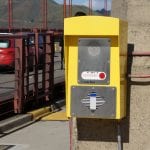
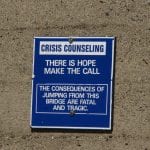
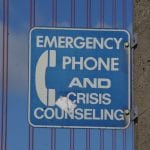
As brutally documented in The Bridge, a film by Eric Steel, San Francisco’s Golden Gate Bridge ranks among the world’s most popular destinations for the suicidal.
Emergency telephones were installed on the Ed Koch/Queensboro Bridge in New York a year or 2 ago, replacing the long-defunct call boxes which still litter the bridge’s steel beams with their useless hulks.
But this story is not about those bridges.
I saw the signs and the call boxes on the Golden Gate in San Francisco and noticed a similar sign on the East River span of the RFK/Triborough Bridge in New York.
(Photography and use of cameras on the RFK/Triborough Bridge is illegal. I cannot share or refer to photos of the sign or the adjacent pedestrian walkway as I write this. I will describe these things from memory.)
The sign on the RFK/Triborough is similar to those found on the Golden Gate. Visible from both the vehicle and pedestrian paths the sign reads “LIFE IS WORTH LIVING” and says that a 24-hour telephone hotline is located 150 feet ahead.
I am a phone guy so when I first saw the sign I had a natural interest in seeing what the emergency telephone device looked like.
I could not find it.
I do not know where the crisis hotline phone on the RFK/Triborough Bridge is located. Unless the phone is incredibly tiny or I am selectively blind then no such telephone exists on the bridge’s pedestrian path. As far as my two eyes can tell there are no emergency telephones whatsoever on the pedestrian walkway of the RFK/Triborough. If the phone referred to on the “LIFE IS WORTH LIVING” sign is located on the vehicle roadway then it would not be visible (or accessible) to pedestrians. If so then I guess it is expected that suicidal people shall drive to their demise, avoiding the more accessible and (I hate to use this word but) attractive option of the higher and less guarded pedestrian path.
The effectiveness of these crisis hotlines is debatable. Still, regardless of their relevance, it seems like a cruel hoax to send a signal to people in need that help is just 150 feet away when no help is to be found.
I mentioned this to friends who are familiar with the East River span of the RFK/Triborough Bridge. Some said that they, too, noticed the sign and that they, too, could not spot the phone. That doesn’t mean it’s not there. It just means that neither I nor anyone I know can find it.
I wouldn’t call it funny. But if no crisis counseling hotline exists on the Triborough then a certain gallows humor inhabits the situation.
Google’s Streetview is, unfortunately, no help in this matter, but fun to look at. These images of the very narrow vehicular roadway are apparently from 2007, 3 years before the “LIFE IS WORTH LIVING” sign announcing the telephone hotline was erected. I assume Google obtained a permit to take these pictures, since use of cameras on the RFK/Triborough Bridge has been illegal since September 11, 2001.
I e-mailed the MTA to ask where the phone hotline was on the East River span of the RFK/Triborough Bridge. An e-mail response informed me that suicide prevention hotlines exist on all the spans of the RFK/Triborough Bridge, and that I should seek help if I needed it. I do not need help (I should have said so in my initial correspondence) but the concern was strangely appreciated. Looking at it from the MTA’s perspective I guess an inquiry from someone simply asking where a certain suicide hotline is located would raise some psychiatric eyebrows.
If the MTA says this phone exists then I believe them. I just can’t find it. I will let you know when I do.