UPDATE August 2017. If you received a call from 212-477-3063 then someone tried to call you from a LinkNYC device. Caller ID on all LinkNYC devices is always 212-477-3063, so there is no way for you to tell where the call came from or who might have placed it. LinkNYC, the so-called “payphone of the future”, is an advertising platform that will replace thousands of payphones throughout New York City. There will also be thousands more LinkNYC units where payphones never existed. I added this introduction in August, 2017, for clarity and succinctness after noticing how many people arrived at this website after typing “212-477-3063” into a search engine. Read more about LinkNYC at LINK.NYC, or follow The Payphone Project’s observations of LinkNYC. A fuller explanation about 212-477-3063 and its connection to public pay telephones follows.
If that is not the most obscure headline you’ve ever seen then you might know a thing or two about a slightly murky side of the payphone world. It involves CityBridge, LinkNYC, PTS, and others. Here is the story.
About 4 years ago the California-based company PTS (Pacific Telemanagement Services) acquired thousands of payphones from Verizon. Most of these phones were (and still are) located in the city’s subway system but others are found at Broadway theaters, public housing projects, and a variety of mostly indoor locations.
This development had likely captured the interest and attention of absolutely nobody but I wrote a story about it anyway, not so much to report on the transfer of payphones from Verizon to PTS but to answer a question that was leading a significant number of visitors to this web site: Who Called Me From (702) 992-9550?
At the time (702) 992-9550 had been appearing on cell phones and CallerID devices throughout the United States. (702) is an area code assigned to the great desert city of Las Vegas, Nevada. But virtually no calls received from (702) 992-9550 originated from Las Vegas. They were coming from “an individual using a payphone located in the United States”, as a singularly unhelpful recorded message informs you if you call that number. Countless payphones across America had been programmed to send out bogus CallerID info for reasons I still do not understand. Those payphones were all owned by PTS. Here is the recorded message played to anyone who calls (702) 992-9550:
Thousands of payphones in New York City alone were sending out this fake CallerID, leading to untold quantities of bewildered interrogations in which callers had to explain that they were not in Las Vegas but close to home at some place like the Times Square subway station.
I was not aware of whether my story had any impact. A couple of years later I learned that it did.
I was invited to attend a meeting of the IPANY (Independent Payphone Association of New York). Once a teeming organization comprising over 100 companies and who knows how many individuals the IPANY had been whittled down to a group 7 or 8 old time payphone guys. These men gathered at a Queens diner not to conduct any legitimate business but to reminisce and to grouse about the city’s punitive payphone penalties and random enforcement of graffiti violations. These penalties seemed to serve no purpose but to put the already dying payphone business out of its beleaguered, insufferable misery.
This IPANY meeting was one of the oddest encounters of my life. In retrospect I think it might have been best if it never happened. I have always known there are people in the real-world business of public telephones who loath this website. There are also people from that realm who adore The Payphone Project. Both of these factions were present at this gathering. It was quite strange. I spent a lot of time staring at myself in a mirror, asking “Who the hell are you?”
Listening to these folks talk shop was enjoyable, though. I discovered that I knew a lot more about the business side of payphones than I thought, while a few new bits of insight came to my attention, one of them specific to The Payphone Project.
A gentleman sitting next to me raised the subject of this web site. He was not happy about it. I don’t remember the DNA of his diatribe but in substance he said that he worked at PTS and that on account of my above-mentioned story his company was forced to reprogram thousands of its payphones to show accurate CallerID information. He didn’t indicate what authority forced them to do this but I assume it was something like the Metropolitan Transit Authority or DoITT (Department of Information Technology & Telecommunications).
“Your web site has an impact!” he shouted at me, nearly puncturing my torso with his index finger. i can’t say i didn’t feel a little bad for the guy and for causing his company to stretch its resources that much farther. On the other hand I think sending out phony CallerID info shouldn’t be allowed, and I was kind of proud to have contributed to a partial reversal of that practice. I later discovered that while they changed things in New York City PTS’s payphones in Boston and probably elsewhere in the United States continue to send out phoney-baloney CallerID info.
I don’t know if The Payphone Project is still read by DoITT, the MTA, PTS, or anyone else from the real world of public telephony and payphones. My comments on the world of public telephony are only genuine and not always positive. I am not the Wall Street Journal, so I would think that even if this web site crosses their radar then the likes of PTS and CityBridge (more on them in a second) would selectively favor more mainstream coverage characterized by favoritism and uncritical reporting.
With that in mind I get to the point of this story, and to explain its headline.
A few weeks ago I gave a once-over review of the new Links, the multipurpose digital depots expected to replace thousands of outdoor payphones in New York City. The Links are manufactured and maintained by CityBridge, which also maintains thousands of New York’s traditional landline payphones. At the time I was surprised to report that each individual Link had been assigned an actual New York City telephone number in the 646 overlay area code.
Since posting that seemingly insignificant bit of trivia I find that Links have been reprogrammed to send out obfuscated CallerID info. Every Link I tried on Third Avenue from 57th Street to 42nd Street showed the same number on CallerID: (212) 477-3063. A call to 1-800-444-4444 (MCI’s toll-free number which tells you what phone number you are calling from) further confirmed that calls made from every Link device I found showed (212) 477-3063 as its CallerID.
So if that number shows up on your CallerID it would seem that someone was trying to call you from a Link device, but you are not allowed to know which one or where it is located.
According to the FCC it is illegal to spoof CallerID info “with the intent to defraud, cause harm, or wrongly obtain anything of value.” It is hard to imagine that CityBridge itself has any malicious intentions, but the shield of anonymity now offered by Links could make them an attractive resource for those who do.
A bit of historical context might be in order to help explain why I believe this matters. The Payphone Project was originally established in 1995 as an art project. The project evolved as it was discovered that individuals and entities out there had legitimate reasons to trace public pay telephone numbers to their exact locations. On account of this demand my collection of payphone numbers and their locations grew, and with the help of telco and law enforcement insiders the collection exploded to about a quarter million listings. As reported in a front page story in the New York Times (May 13, 2004) The Payphone Project data proved critical in helping locate or identify runaways, pedophiles, and stalkers who thought public telephones gave them a shield of anonymity. With CityBridge’s Links that shield of anonymity appears to be back, offering location anonymity to those elements of society mentioned in the New York Times story. (It’s been years but I still freak out when I see that Times story. Front page A1, baby! Ahaaa.)
Another risk in CityBridge’s CallerID spoofing is that 911 dispatchers might have difficulty determining exactly where a call originates. I am not behind the scenes on any of this stuff so I don’t know if a Link is programmed to send its exact location to 911 dispatchers and fake info to everybody else. By the same token I do not know if PTS had programmed its phones to send the Las Vegas number to everyone except 911. If you listen to the recorded message at (702) 992-9550 it doesn’t sound like they did. The message ends with a notice to law enforcement, instructing them to contact someone through an e-mail address if they need information on the exact location of the payphone. Will a similar message need to be appended to LinkNYC’s recorded message?
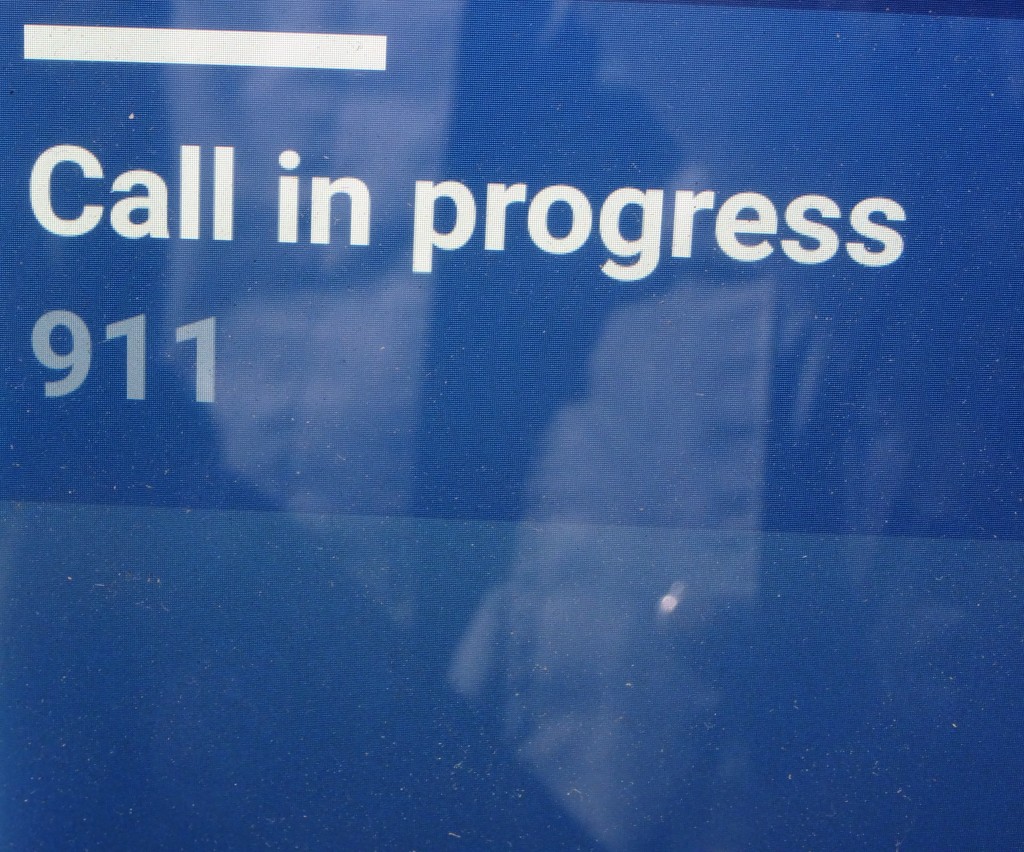
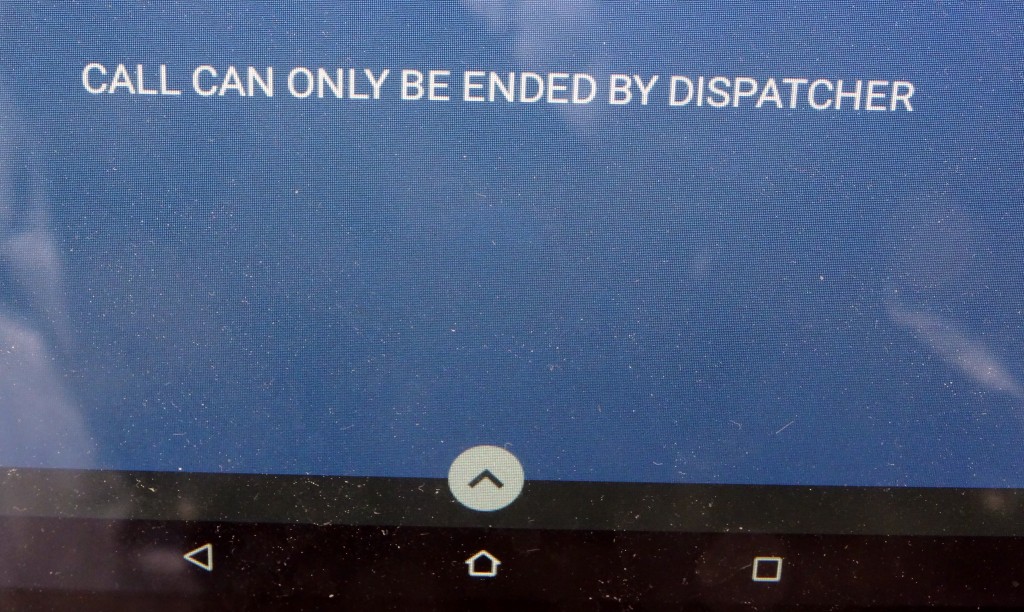
Speaking of LinkNYC’s 911 functionality I spotted this somewhat troubling glitch on a Link outside the Smith and Wollensky Steakhouse at Third Avenue and 49th Street. Apparently someone called 911 and left an emergency dispatcher hanging. There is no way to know if the call was legitimate (somehow I doubt it) but the dispatcher’s apparent inability to end the call looks like an unwelcome glitch that turns this Link into nothing but a big slab of advertising. i spotted this Link at about 1:10pm. A half-hour later it was still stuck in this state.