I finally tackled the tedious but satisfying task of editing and processing over 1600 payphone calls I made from 2011 to 2020. About 63 hours of that stuff now populates the Shoutcast stream at payphoneradio.com.
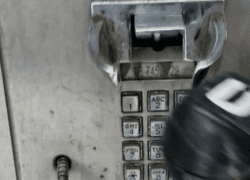
A video tour of what's left of payphones in Sunset Park and Bay Ridge, Brooklyn. At the end of this I make a rookie mistake in thinking that just because a payphone has dial tone that means it will work. Learn from my mistake, folks: Don't put your coin until after dialing the number.
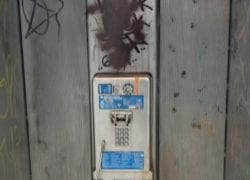
Closest thing to dial tone in this series is the infamous stuck key payphone at the 74th Street/Roosevelt Avenue/Broadway subway station. That phone has dial tone but its stuck * key makes calls impossible.
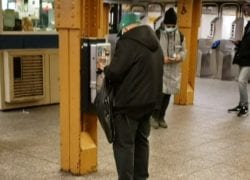
This incident proves, yet again, that people still need payphones, and would use them if they worked. New York is fast becoming a city where people like the man seen in this video are unable to do something so fundamental that most of us take for granted. He was unable to make a phone call. And also, some ramblings about the old Apology Line and recent activity regarding my acquisition of its original 212-255-2748 number.
Only three weeks after I captured these videos of Chinatown's last payphones it appears all or most of them are gone. I got to them just in time.
I spent a couple of hours at Old Calvary Cemetery in Queens with Jessi Highet and Mike Varley, giving them a sort of guided tour of the grounds with discussion of death, mortality and, of course, payphones. Watch the videos. Sometimes I even sound like I know what I'm talking about.
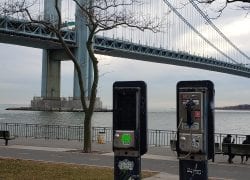
This looks like a cool spot for a filming location should a director need or benefit from an authentic 1990s-era payphone with a dramatic backdrop.
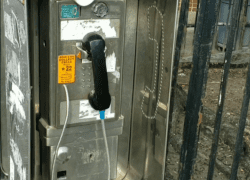
I took the 4 to Fordham to check in on some straggler PTS payphones, as well as a couple of failures from the LinkNYC "Smart City" rollout.
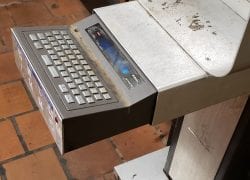
In which I spotted something I have never seen in the wild before: A payphone TTY keyboard rolled out and, from what I could tell, in full working order.
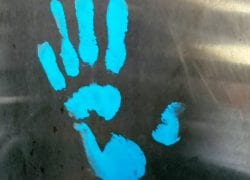
This tour, from yesterday, includes yet more discussion about PRAY and shots of some surviving PRAYphones. I hope I don't get boring with my PRAY ramblings but I genuinely find the stubborn survival of her messages on New York's payphones to be the stuff of legend.
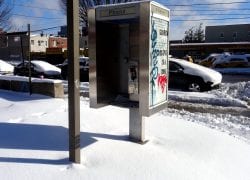
People still use payphones. But we knew that already, didn't we?
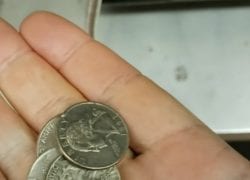
I earned a small jackpot after hanging up the Rockefeller Center payphone last week. What I don't understand is why someone would deposit coins into a payphone then walk off. I happened to catch this windfall on video.
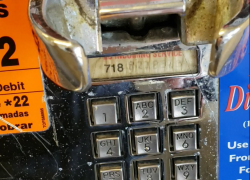
Here's what I could find of payphones in three separate parts of town. Not much dial tone to be heard out there.
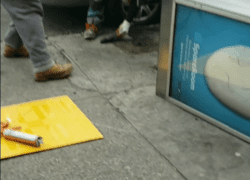
I just happened to have been present at the removal of an Astoria payphone yesterday morning. It is always jarring to see a payphone gone but it was another level of weirdness to see the actual process of dismantling a phone I'd used hundreds of times.
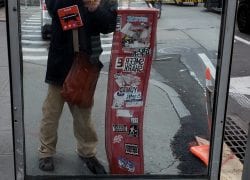
There is some pretty good stuff on some Sixth Avenue payphones. "TITAN" brings the work of 12 artists to 12 payphones for 12 weeks, ending January 3,. 2021. Sixth Avenue between 51st and 56th Streets is now an outdoor museum thanks to the work of Bree Zucker, Damián Ortega, and the Kurimanzutto Gallery
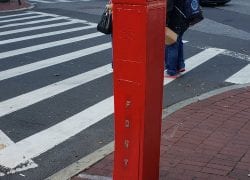
Watch this video for a tour of an archaic piece of street furniture for which New Yorkers pay millions, while probably forgetting they are there. This post now includes both parts 1 and 2 of these videos.
I've been on a video-making kick lately. This one has me traipsing familiar territory, along 21st Street in Long Island City, whilst finding a couple of surprises: Two fresh casualties of New York's payphone apocalypse and a signature etching from the legendary scratchiti artist PRAY.
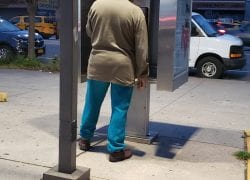
This was awesome. Magical, even. I was making a video about this phone when a real world payphone user interrupted me, asking if he could make a phone call. That is what he did. People still use payphones!
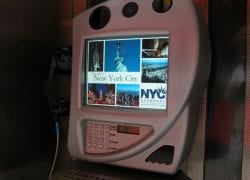
The person who brought New York its first outdoor "payphone of the future" died earlier this year.
This phone is among the last outdoor phones in New York not owned or confiscated by CityBridge, the consortium of media, tech, and advertising companies awarded a monopoly franchise on virtually all of New York's outdoor payphones.
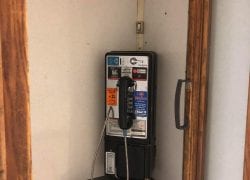
Now we know. The phone number of the working (yes! working) payphone in the old wood phone booth at New York Presbyterian Hospital is 212-650-1338. No incoming calls accepted but now you would at least know *where* someone is calling from if 212-650-1338 shows up on your caller ID.
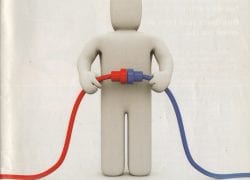
Explore the inner workings of the payphone world in what was the industry's last official trade journal, Perspectives, published by the American public Communications Council.
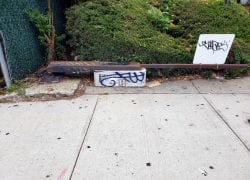
Did this payphone simply give up? Did it fall in love with and start making out with the sidewalk? Was a taco involved?
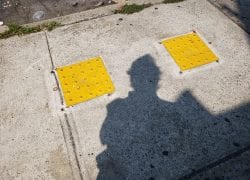
New York's payphones are still hanging in there, with signs that dial tone may yet return to those neglected pieces of street furniture. I've canvassed large parts of Manhattan and Queens, and a little bit of Brooklyn, to check on the payphone carnage.
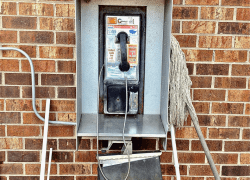
Mark Mathosian writes about the slow demise of the last payphone in Advance, North Carolina.
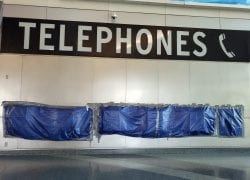
Could the Ferry Terminal peeps have not come up with a more elegant way of sealing off the payphones? Like, barricading them with billboards, or additional seating, or food trucks, or something besides a bunch of Hefty bags?
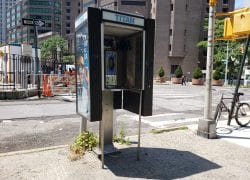
A tour of Lower Manhattan's payphone population found me making a call from a payphone right across the street from the Metropolitan Correctional Center, Manhattan's maximum security prison.
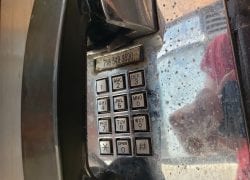
In February DoITT and CityBridge promised Hell's Kitchen Council Speaker Corey Johnson removal of payphone enclosures from his district. It doesn't look like that actually happened.