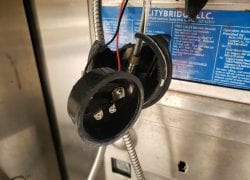
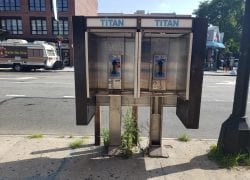
This double enclosure at 8th Avenue and 42nd Street, catty-corner from the Port Authority Bus Terminal, is the most consistently and reliably urine-stenched payphone I know of in New York. It seems the spot is always freshly urinated upon any time I set foot upon it, making my eyes water and my tummy churn. Yet, I use the phones anyway. Because they just f*ing work.
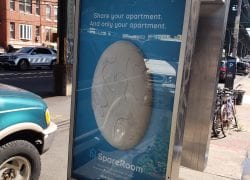
With fresh ads being sold on the old payphone enclosures, and a "Payphone Technician" job up for grabs, it seems there might be a future yet for New York's payphones.
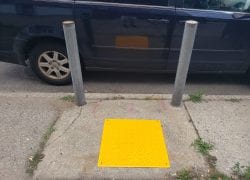
A payphone I used only occasionally vanished this week, bringing Astoria's payphone population down to 11. Just a couple of months ago there were dozens.
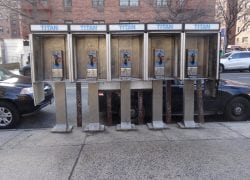
New York's payphone apocalypse continues, with five phones in a row taken out on Junction Boulevard at 59th Avenue in Elmhurst, Queens.
Why would a public pay telephone connect to a recorded message saying my call could not be completed because I don't have enough account credits?
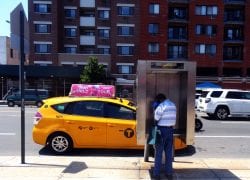
I would not know what rationale informs the decision to take out a particular phone, or if a coherent rationale even exists. Has the time come when the City finally decrees that public telephones should not exist?
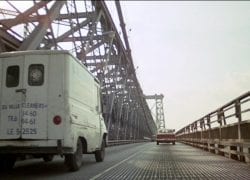
Last night's hunt for PRAY in the 1973 film "Serpico" turned up an unexpected bit of telephonic trivia. A van from Du Valle Cleaners passes by with a few telephone numbers in the old telephone exchange name format.
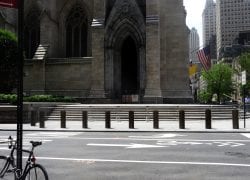
Midtown Manhattan lost some of its religion during the pandemic, and not just because of church closures. Two of Manhattan's few remaining PRAYphones disappeared from 51st Street, across from St. Patrick's Cathedral.
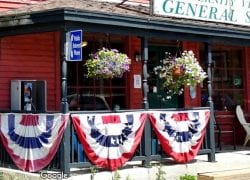
Take a tour of Maine's Public Interest Payphones, deployed at locations throughout the state in the interest of public safety.
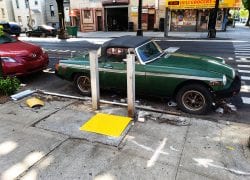
An amazing thing about these payphone enclosures is how successfully they cancel out the noise of the above-ground subway, allowing one to continue a conversation without having to scream. The same cannot be said of the LinkNYC kiosks that threaten to replace and supplement the quantity of today's NYC payphones.
If anything, the virus has accelerated the inevitable move away from using payphones as the sole microphone for Payphone Radio.
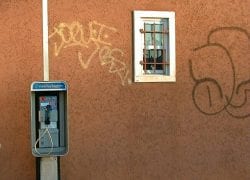
had been thinking about canceling my New York Times subscription. This article almost made me do it.
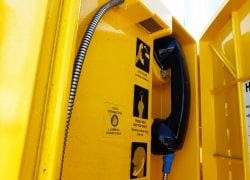
A return visit to the new Kosciuszko Bridge revealed good news. Emergency call box telephones have been installed, along with a somewhat ludicrous quantity of trash cans.
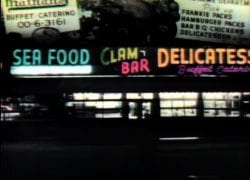
The opening credits from season 5 of "Saturday Night Live" opened a bit of a mystery to me when I watched it last week. Was there ever an "OO" telephone exchange in NYC? If so what did it stand for?
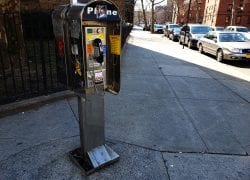
These back-to-back payphones at the Queensbridge Houses in Long Island City have some special meaning to me, on account of the circumstances under which I found them.
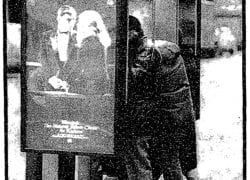
A little bit of history on how and why New York City's phone booths of the past evolved into LinkNYC.
From its payphones to its financial failings, CityBridge and its LinkNYC program had a rough couple of weeks.
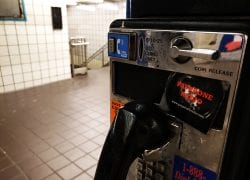
Making connections, one payphone at a time.
Was 1-800-WEATHER seized by the Internal Revenue Service? Or by a pot shop in Seattle? Or both?
I gave myself too much credit in getting someone to fix LinkNYC's inability to connect to the 711 relay service. Oh well.
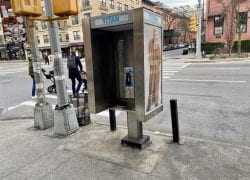
An article at AMNY reports that about 30 payphones on 9th Avenue in midtown are on the chopping block, thanks to community complaints and CityBridge's reportedly poor maintenance.
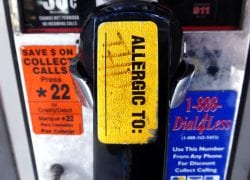
Outside an Eastern Bank in Boston, these phones' numbers would be (617) 247-1255 and (617) 247-1249, if they still stand today.
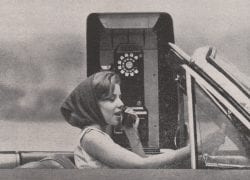
Just some images I scanned from an old Bell Telephone ad found in a desk drawer, probably an eBay purchase from years ago.
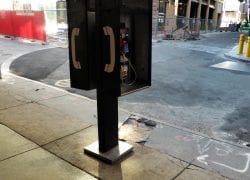
These two back-to-back payphones, at 617-338-6433 and 617-338-6548, appear to remain active on Summer Street, near Macy's, in Boston, 5½ years after I took these photos, and who knows how many years since first deployed.
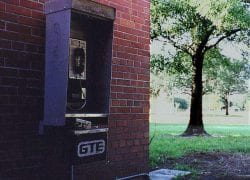
Memories of the first payphone to which I remember ever having regular access. Oh, how I worked this phone at my high school. This is a rewrite of a story I wrote a long time ago.

My Internet radio projects are not for everybody, so it is especially gratifying to connect with someone out there who just gets it.
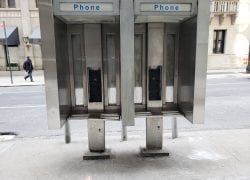
CityBridge, which owns all of NYC's outdoor payphones and LinkNYC kiosks, has disabled access to 711, the free service that allows deaf and mute people to make phone calls.
An elderly woman last week saw me at a payphone and asked if I needed a phone. Why do I make so many payphone calls?