
Midtown Manhattan lost some of its religion during the pandemic, and not just because of church closures. Gone now are at least two instances of a subliminal form of evangelicism, formerly hiding in plain sight since the 1980s. Despite their enduring presence the messages, virtually invisible, likely captured the attentions of absolutely nobody.
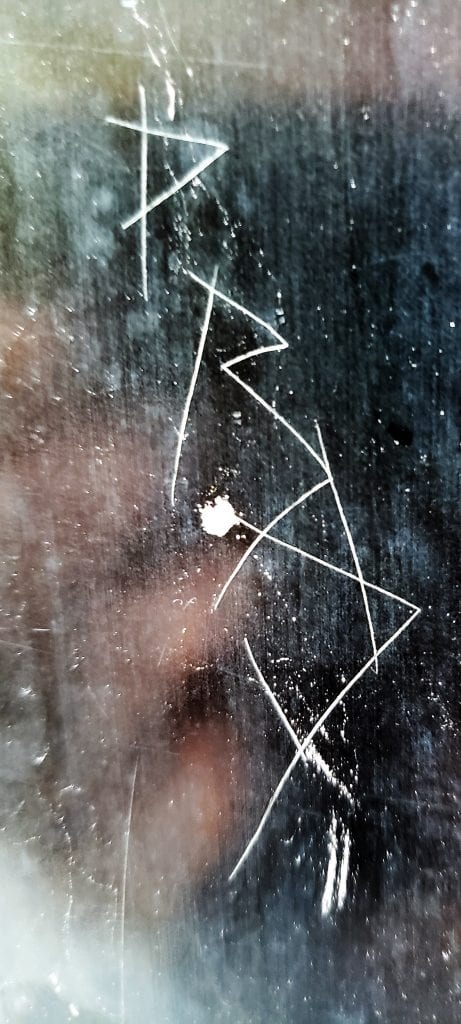
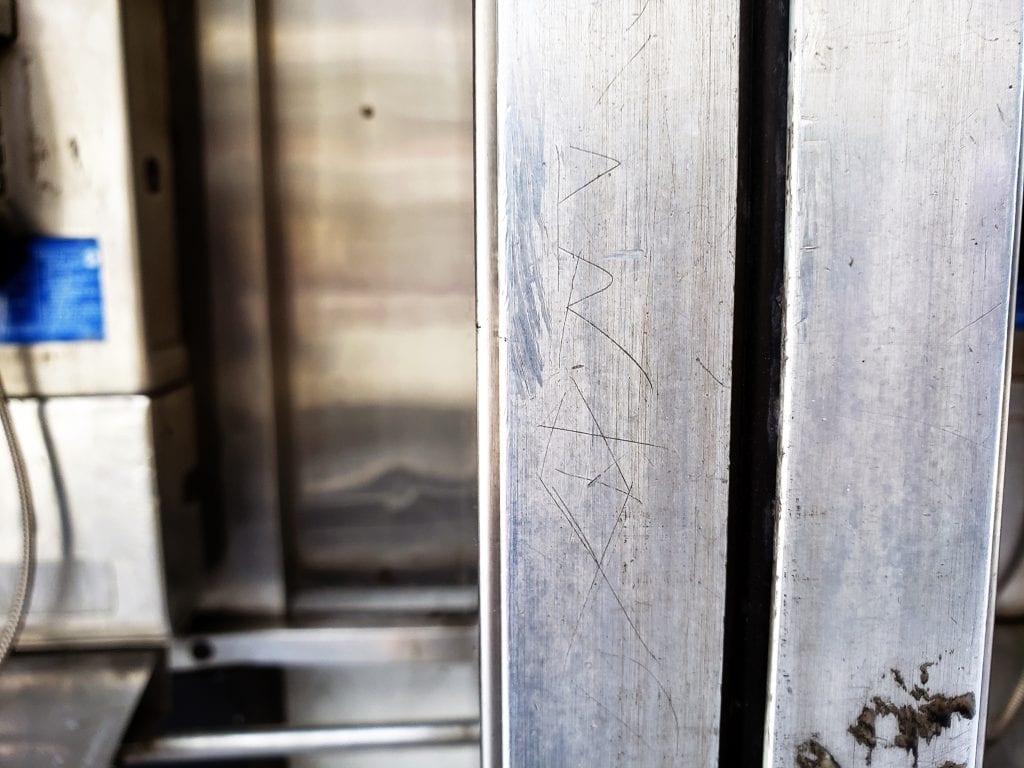
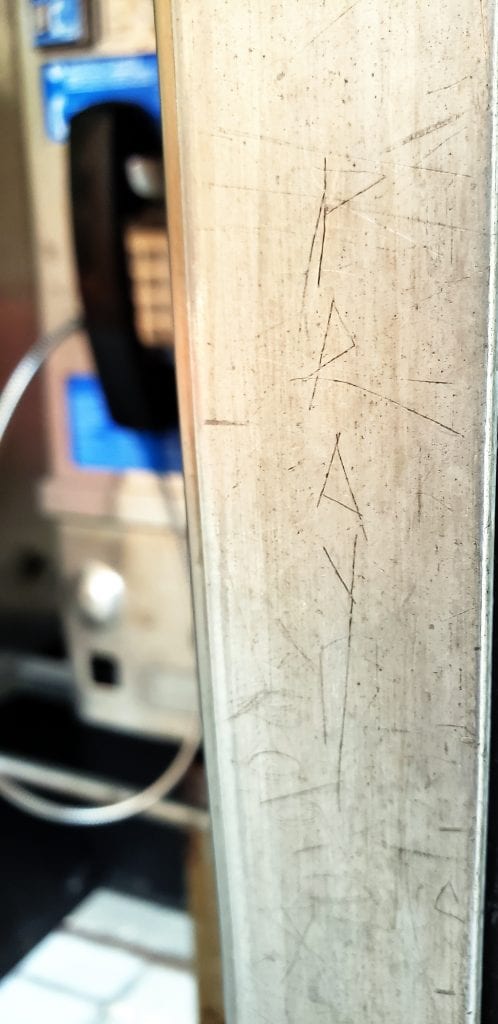
Within the two payphone enclosures that used to stand on East 51st Street, just off of 5th Avenue, appeared two instances of religious scratchiti, probably from the hands of PRAY, the legendary street artist whose obsessed pursuits earned her a permanent place in the lore of New York City street art, most recently including a spot in last year’s blockbuster “Beyond the Streets” exhibit in Williamsburg.
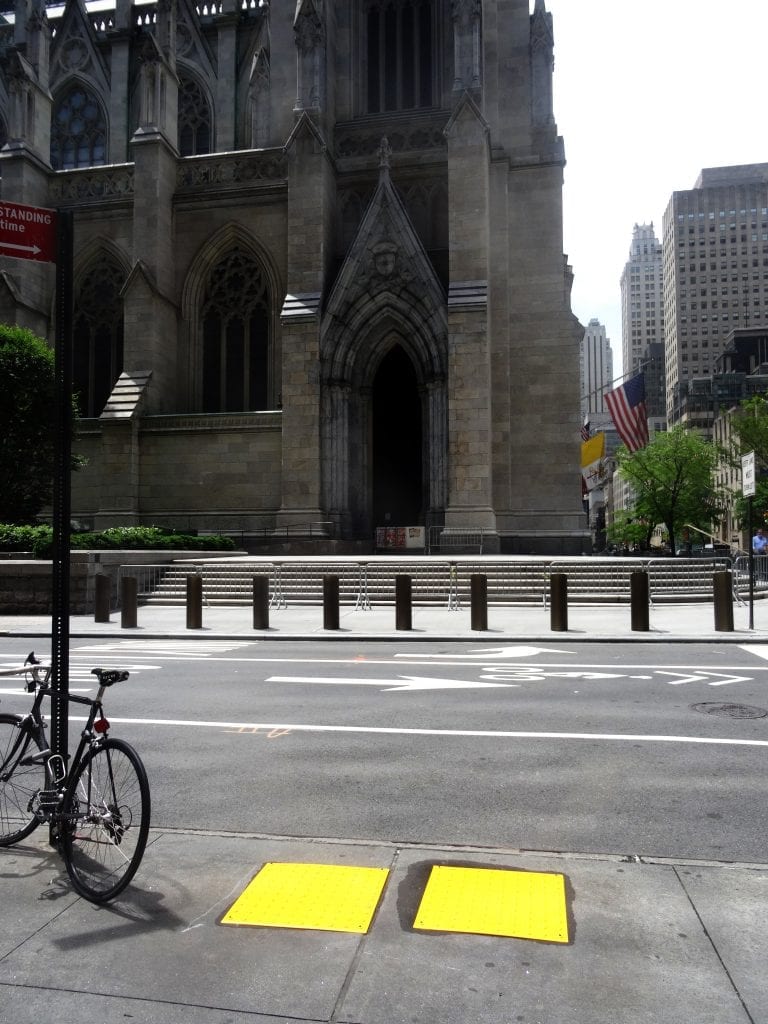
These phones were located, appropriately enough, across the street from St. Patrick’s Cathedral.
This up-close video makes these etchings look a lot more obvious than they do in person, to the naked eye. But the words “GO TO CHURCH READ BIBLE” were undoubtedly present in these old booths.
All that is left of these two payphones (I called them PRAYphones) is a couple of yellow sheets, which look something like bath mats for a shower stall.
WHO WAS SHE?
I first heard about PRAY, the only name by which she is known today, in 1991, while working as a clerk at Tower Records. A store manager, speaking in a tone of both respect and bewilderment, told the legend of an elderly white woman who etched religious exhortations onto every single payphone in New York, and on mailboxes, fences, park benches, subway cars, and countless other surfaces.
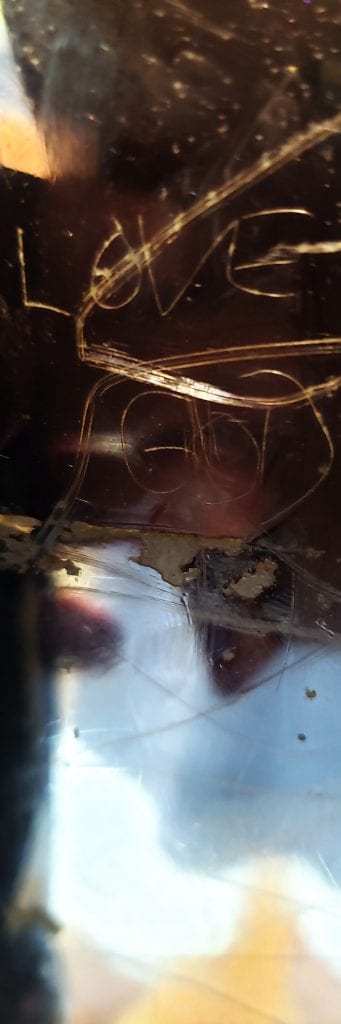
From the moment I left the record store that day I started seeing “PRAY” and “LOVE GOD” and other such messages, bulging like neon signs, not just on payphones but everywhere, or so it seemed. Street furniture suddenly came alive to me as I studied it for evangelical directives.
In those days I was more inclined toward religious guilt and existential misgivings. These brief missives, more than the determination of whoever authored them, had a different resonance for me then than now. Today I respect not so much the messages themselves but the grit and grist of whoever delivered them in a way that feels miraculous for me to still be receiving.
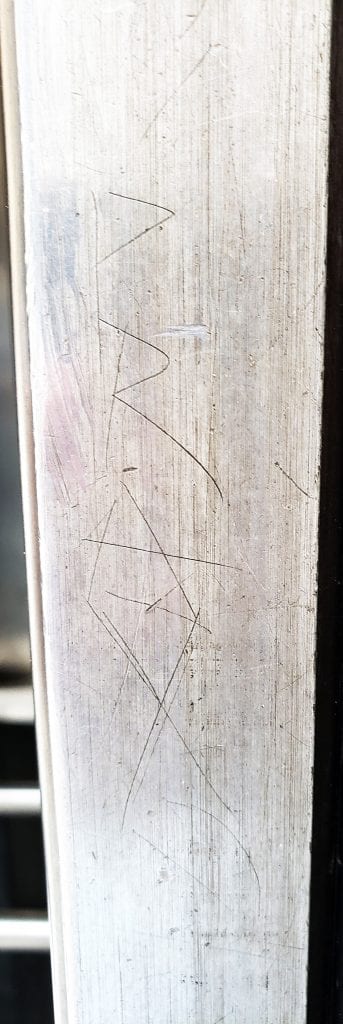
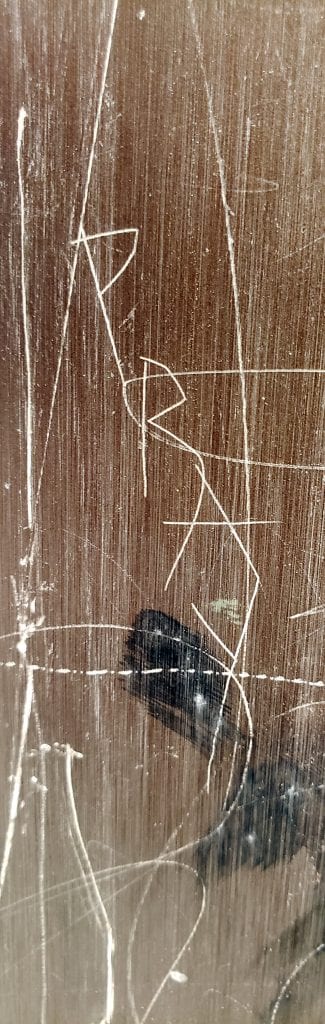
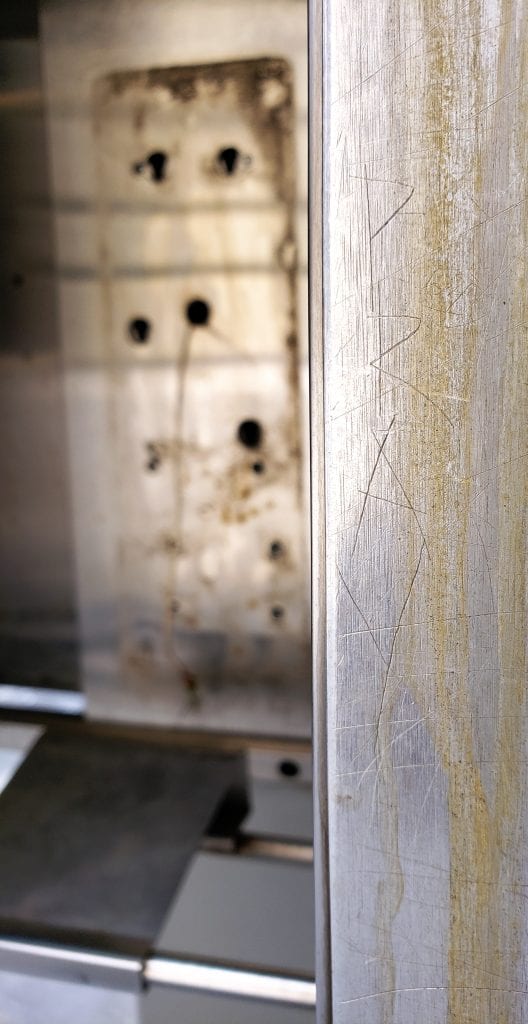
Few of these etchings that survive today are especially obvious to the naked eye. I have shown these etchings to people who insist they simply cannot see them at all. I concur that it takes some effort and even concentration to summon the “GO TO CHURCH” etchings formerly found deep inside these now-gone payphone enclosures on 51st Street. But they were absolutely present.
The “PRAY” etchings, the ones that survive today, also present a bit of an ocular challenge, blending in with the swirl of decades of faded paint or only visible from a certain angle, under perfect lighting conditions. But once seen, I find, they cannot be unseen.
DID SHE ACT ALONE?
Did all these etchings come from the hands of one elderly vagrant woman? Or did “PRAY” and “LOVE GOD” and “GO TO CHURCH READ BIBLE” come from a syndicate of street prophets?
These questions might not matter, since we will almost certainly never have definitive answers. But PRAY remaining anonymous supports my belief that she acted alone. If multiple individuals took part in getting these messages out it seems far more likely one of them would, deliberately or not, have identified themselves or their cohorts.
One man who believed PRAY acted alone had a perspective I believe more authoritative than most. James Horris, head of payphone operations for New York Telephone in the 1980s, said he believed the religious admonitions came from the hands of one lone prophet.
Horris was quoted in the September 8, 1983, edition of the Wall Street Journal, in an article on the changing face of phone booths in New York: “What Has Happened To Pay Telephones? Change, of Course”. After stating his belief PRAY acted alone Horris added, with begrudging approval and faint praise: “There are a lot of other messages I’d feel more uncomfortable with.”
More uncomfortable.
I KEEP FINDING HER
My PRAY-hunting skills have refined considerably since June, 2018, when I posted photos of what may or may not have been authentic scratchitis of PRAY on a D train to Coney Island, and another on a Lower Manhattan payphone. Since then I uncovered at least a few dozen instances of what I consider authentic PRAY etchings, a statement I make with only as much certainty as possible when confronted with this ephemeral ghost of the streets.
I found etchings of “PRAY” and “GO TO CHURCH READ BIBLE” on payphones in four of the five boroughs, from Pelham Bay to Inwood to Harlem to Midtown to Herald Square to Astoria to Corona to Flushing to Carroll Gardens to Coney Island and forgotten points in between. I did not canvas Staten Island because the payphones there are too new, installed in the 1990s.
PRAY IN THE MEDIA
PRAY is often described as a 1980s phenomenon, but her footprint dates from at least the early 1970s. The first mainstream media mention of her work probably dates from 1973, when Brooks Atkinson, writing for the April 5 issue of the New York Times, reported that a fence surrounding a park on Third Avenue was covered with religious graffiti: “Live for God”, “Pray Always”, “Go To Church”, “Read Bible”.
Also in 1973 PRAY made what might have been a cameo appearance in the film “Serpico”, starring Al Pacino. I am not altogether convinced of this but an anonymous commenter on the Southbound and Down article about PRAY said one of her tags could be seen in that film.
I combed “Serpico” for over an hour assuming I’d find a phone booth scene with the “PRAY” etching visible. Phone booths make a few passing appearances in “Serpico” but in those I spotted no obvious trace of PRAY.
What the anonymous commenter must have referred to was this appearance, at about 40 minutes into the film, of the words “GOD WANTS YOU IN CHURCH OFTEN”, in the 57th Street subway station.

That’s not a tag I’d ever seen associated with PRAY, but it sure as heck sounds like her. The contour of the letter “G” distinctly resembles that of the one in the “GO TO CHURCH READ BIBLE” video from earlier in this story.
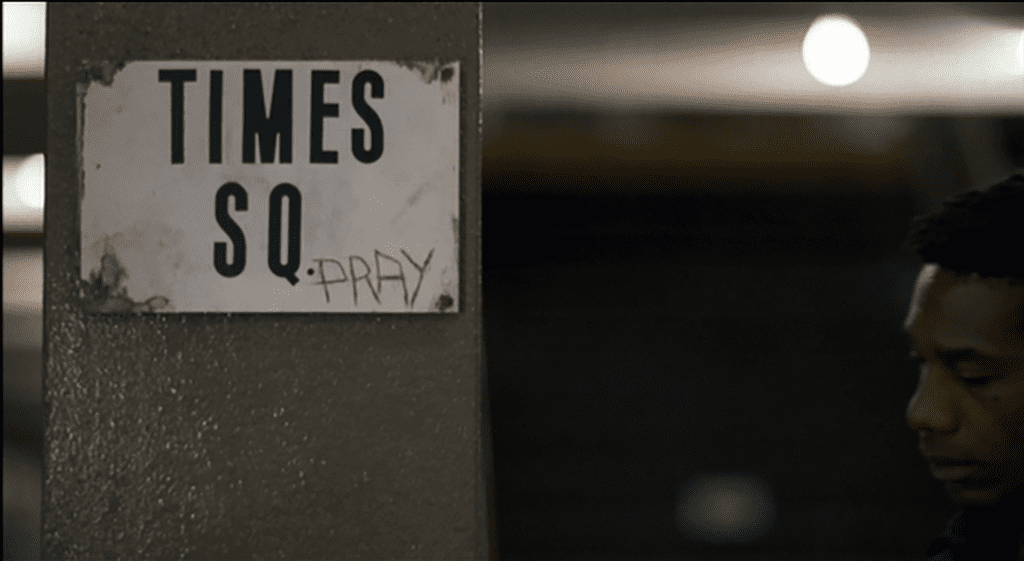
UPDATE June 22 2022 – Thanks to Diggy64 in the comments section of this article I can now include this PRAY sighting from the 1984 film “Brother From Another Planet.” Fun film, btw. This appearance is at about 44:38.
Other media references include the September, 1989, issue of “Spy” Magazine, which presumed that multiple people were behind the “PRAY pandemic”. “Spy” was mostly a satire magazine but they usually threw in at least one fact-based story per issue, with a bit of snark.
In a tantalizing account from Craig Castleman’s seminal book “Getting Up” one street writer’s encounter with PRAY is said to have ended with the artist, Bama, capturing the elusive legend in a photograph. O, to see her visage!
I visited the park on Third Avenue, mentioned in 1973 by Brooks Atkinson in the Times, finding no surviving evidence of what would have been a remarkably enduring swath of 47-year old scratchiti.
But PRAY’s message remains on the streets to this day, most notably on payphones, but no longer in the heart of midtown, across from St. Patrick’s Cathedral. As New York’s payphone apocalypse continues we lose more than just payphones. We lose a subliminal piece of the fabric of these streets. We lose the last vestiges of the legendary PRAY.
IMITATORS? OR TRIBUTES?
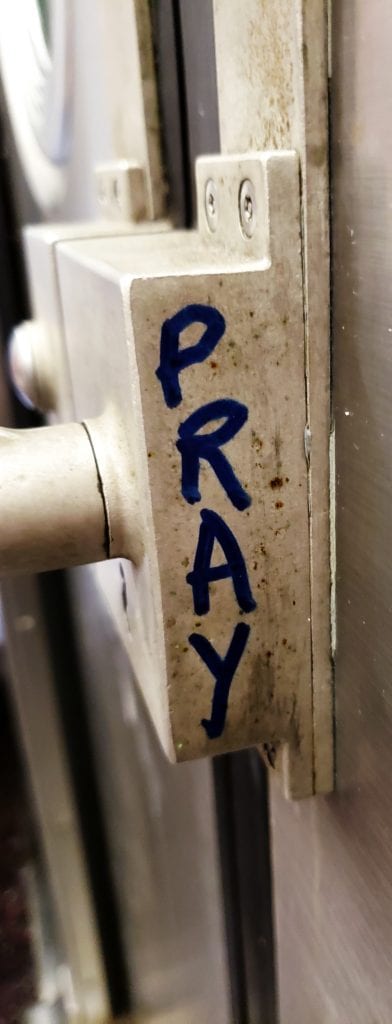
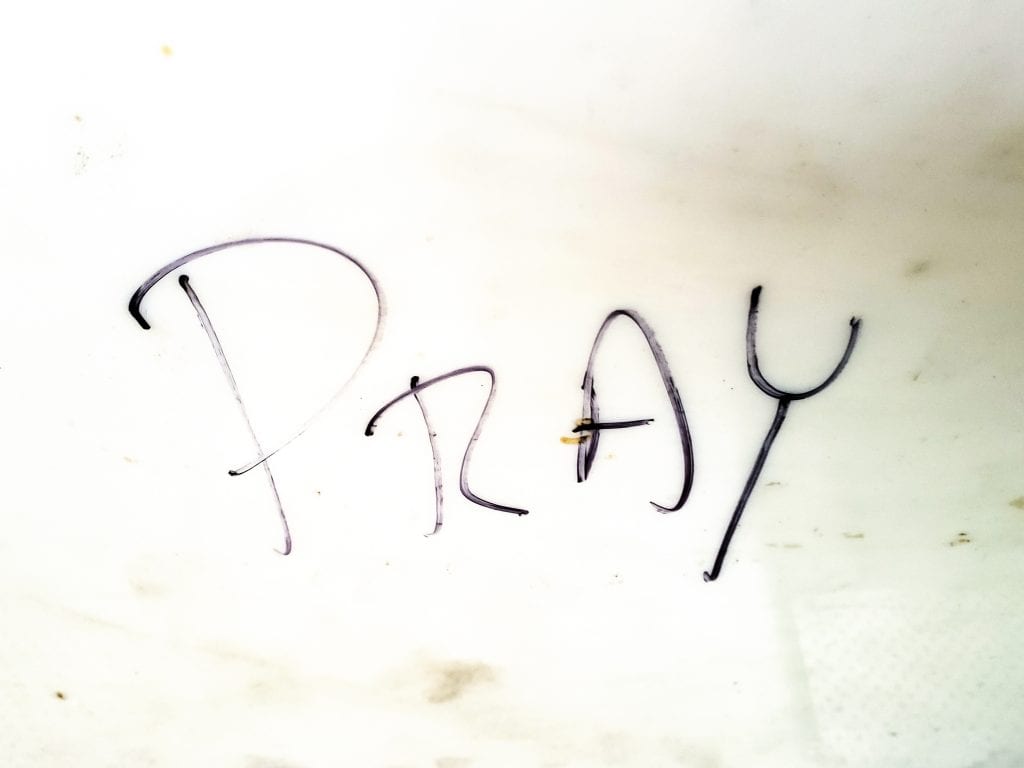
I would not know if instances of “PRAY” today are deliberate tributes to the original, but I have spotted a handful of occurrences in the last year or so. Make of them what you wish. The first is from a subway car last year. The next is from just last month, on the ceiling of a payphone enclosure at Queens Plaza.
See also the film “The Brother From Another Planet” from 1984.
P.S. There are more in film….
I will look for that film. Trying to download it now but Usenet is burping.
I swear I saw genuine PRAY on one of the coin vaults at the payphone carousel at 77 Water Street. That was maybe 2 or 2½ years ago. I encounter those phones frequently now and cannot find that PRAY for the life of me. I should go out with a magnifying glass because I know I saw it there. Somehow it’s been unseen.
Aha, found it, at 44:38!
You got it!
There are definitely more. I will have to find my notes.