
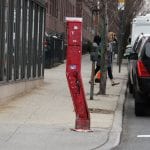
One species of New York City public telephony which simply will not die is the red emergency callbox. Located every 2 or 3 blocks many of these callboxes appear to be well-maintained. Many others, however, linger in disarray and bedragglement, probably not functional even though federal law requires that they work.
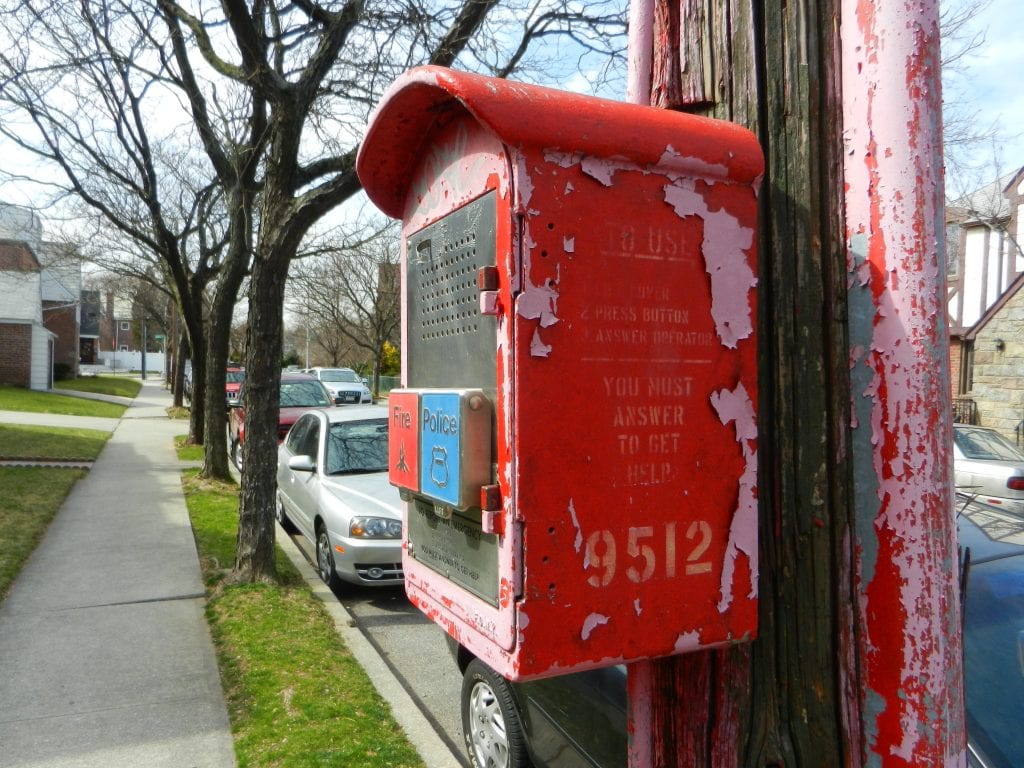
In the past these devices received fairly frequent use, but with the rise of cellphones the primary function today seems to be aiding false alarms: levers pulled and buttons pressed on these callboxes are blamed for about 11,000 false alarms per year.
At the heart of the callboxes’ stubborn survival is the Americans With Disabilities Act (ADA), that potent piece of legislation which requires essential public services be made equally available to all, including the deaf and hearing-impaired.
The city’s desire to remove these callboxes was at the heart of a long-running lawsuit (The Civic Association of the Deaf of New York City vs. The City of New York) which reached a verdict last year.
In the August, 2011, ruling, Judge Robert Sweet of the Southern District of New York conceded that the callboxes relied on dinosaur technology, but that the city had failed to prove citizens with disabilities would have equal access to report emergencies should the callboxes be removed. This was said to be particularly true of those who would rely on the “tapping protocol” to report fires or crimes.
This video produced by the FDNY features a demonstration of the tapping protocol.
The city may still appeal the verdict. It would be interesting, however, if instead of seeking to remove these callboxes the city sought ways to leverage this broad communications infrastructure, perhaps improving the devices as public communications devices usable by all.
 The city made a surprisingly specious argument in favor of the callboxes’ removal, claiming public payphones offered a viable alternative. With 15,000 callboxes and (at the time of the ruling) about 14,500 payphones in New York it may have seemed that the quantity of payphones offered a possible substitute for callboxes.
But cursory due diligence shows, as Judge Sweet pointed out, that payphones are nowhere near as evenly distributed as callboxes (which can be found every 2 or 3 blocks), nor can privately-owned payphones be expected to work in the public interest.
Payphones in New York are commonly placed around high-traffic areas where maximum revenues can be earned from display advertising. Emergency callboxes are evenly enough distributed that they could offer uniform access to emergency services to a public informed of their existence.
 The Judge’s rejection of the payphone argument in this case seems sound, and I am surprised that the city introduced it. But I also agree with the chorus of observers who think the callboxes either should not exist or should be substantially overhauled. To conform with the ADA and Judge Sweet’s ruling the city could leverage this infrastructure already in place by upgrading the boxes with more fully-functional devices usable by all.
Entrants in the current Reinvent Payphones contest might consider exploring ways to revive the callboxes as a complement to public telephones, or even as the payphone of the future.
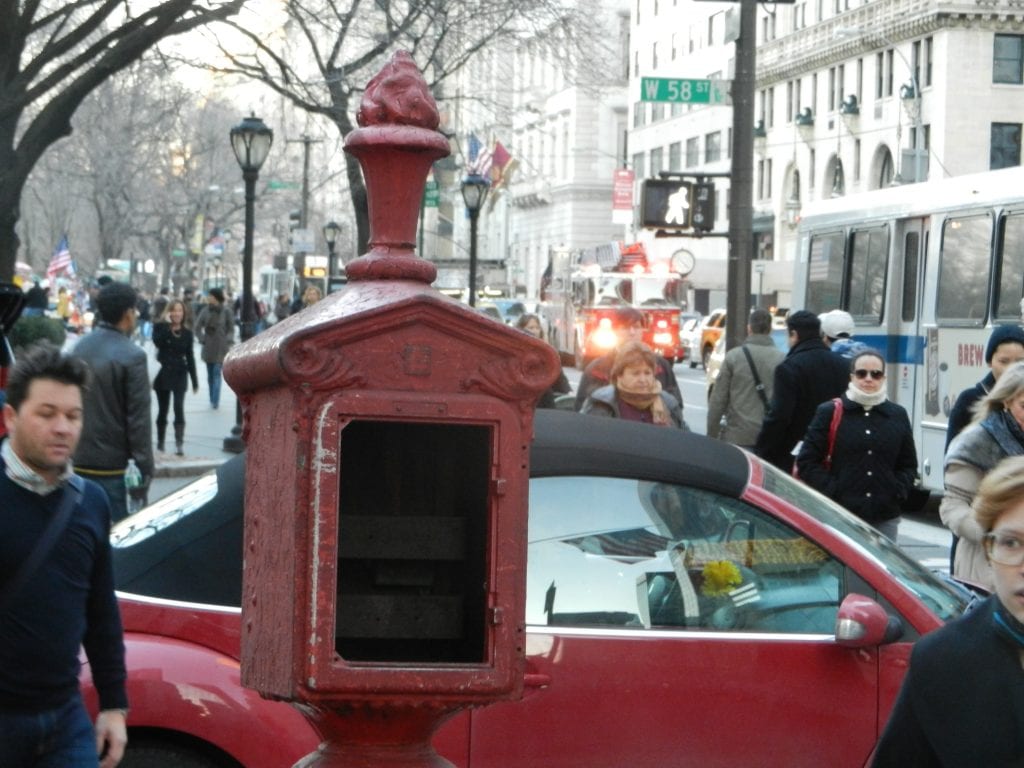
Many of the old boxes are hollowed out, and have been for years. Needless to say the NYPD fire truck seen in this photo was not responding to a call made from this empty, useless hulk.
Judging from the acrobatic positions in which some of the boxes are locked it would appear that many of them were involved in vehicular accidents. Callboxes damaged in accidents are often never replaced, prompting complaints from absolutely nobody.
Nevertheless, the city inspects these callboxes and under federal law they are expected to function. The boxes mostly attract false alarms, with a predictable flood of calls coming when school lets out at 3pm.
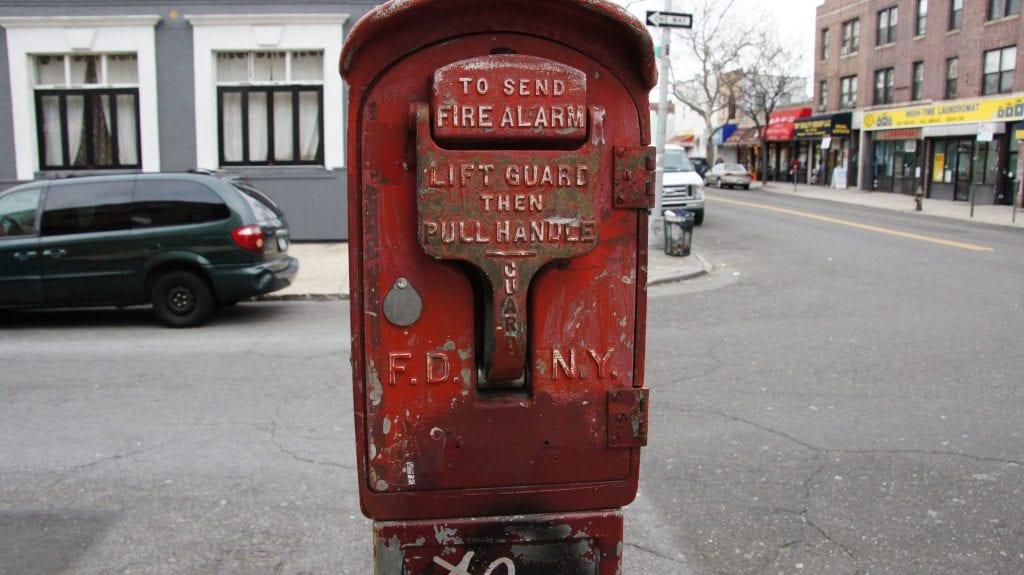
The oldest callboxes (Box Alarm Readout System, or BARS) do not offer two-way communication with a 911 dispatcher. Pulling the lever on the BARS boxes sends a message to a 911 dispatcher who cannot respond to clarify the nature of the emergency and is thus required to dispatch emergency personnel. Dispatchers have developed ways of determining when these calls are false alarms, which is almost all of the time.
These older boxes actually send Morse Code to a 911 dispatcher. 911 operators do not translate that Morse Code. The 911 switchboard automatically translates the dots and dashes, specifying the exact location of the callbox.
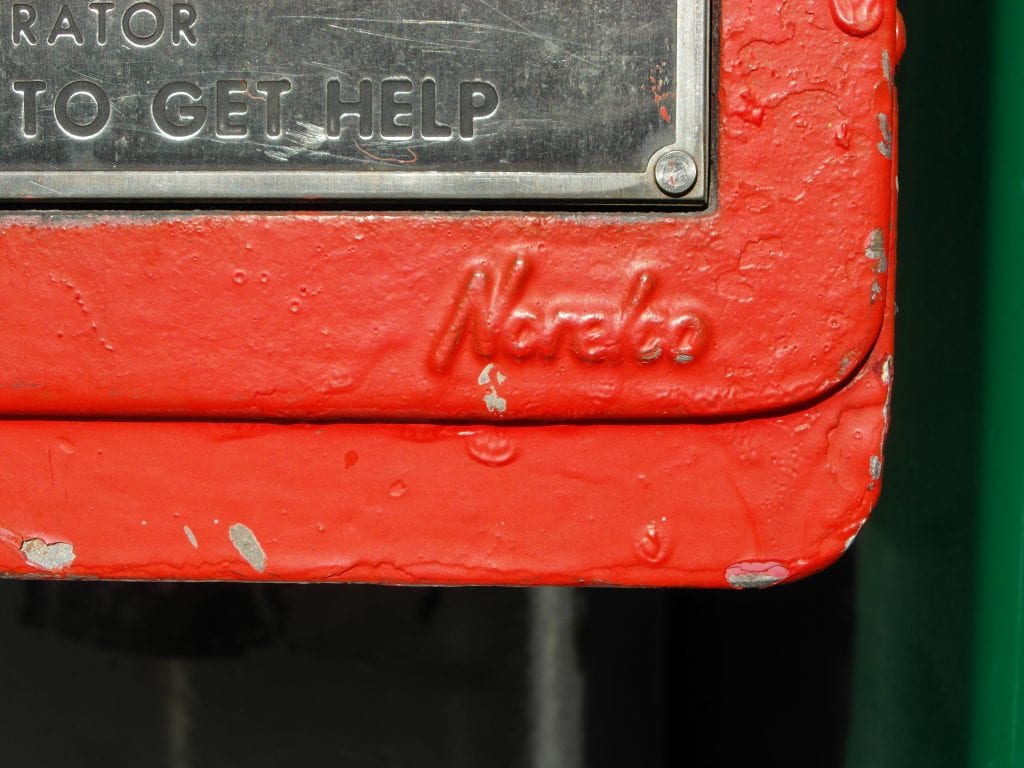
The older BARS callboxes were manufactured by Norelco. Who knew that a company best known for electric razors also produced public emergency callboxes?
In 1997 the city was ordered to modernize all the callboxes with 2-button devices. Unlike the BARS boxes, which offer one-way communication in reporting a fire, the newer devices offer two-way communication with either the Fire Department or the Police. The newer models help reduce false alarms by requiring that the individual reporting the incident communicate with the dispatcher.
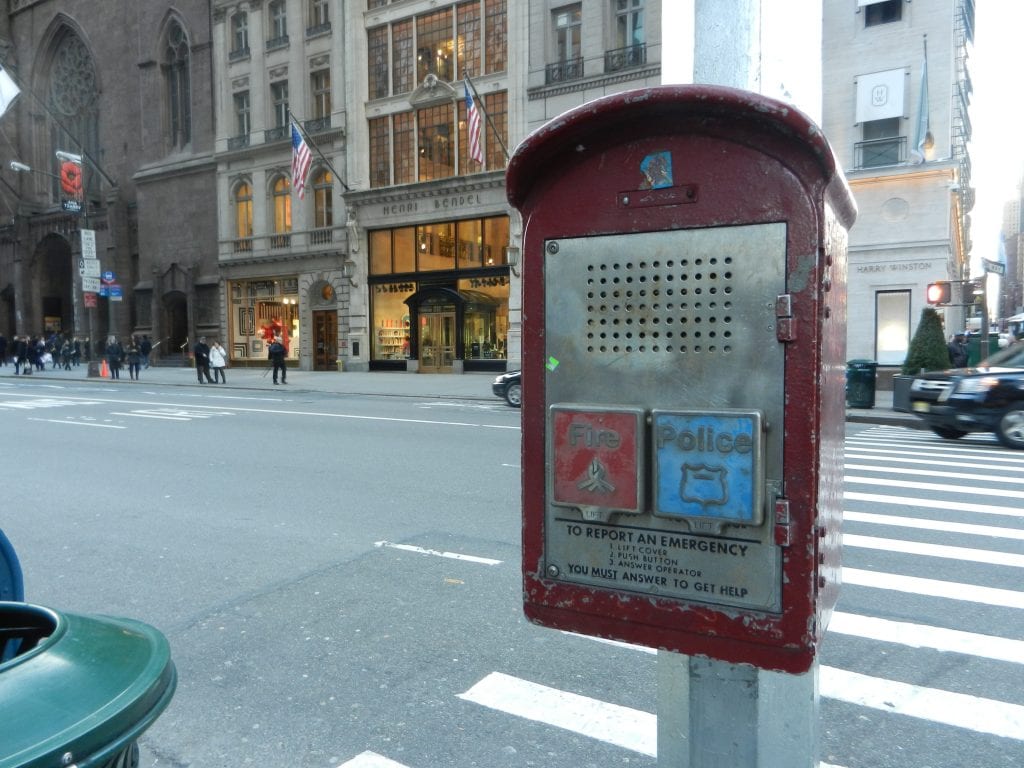
Apparently the city is still modernizing the devices, as thousands of lever-activated BARS boxes remain.
Wherever you spot a callbox you should be able to look up and see a cone-shaped LED light bulb on top of a nearby streetlamp. There is no precise formula for where these lights are placed, but they are usually easy to spot.
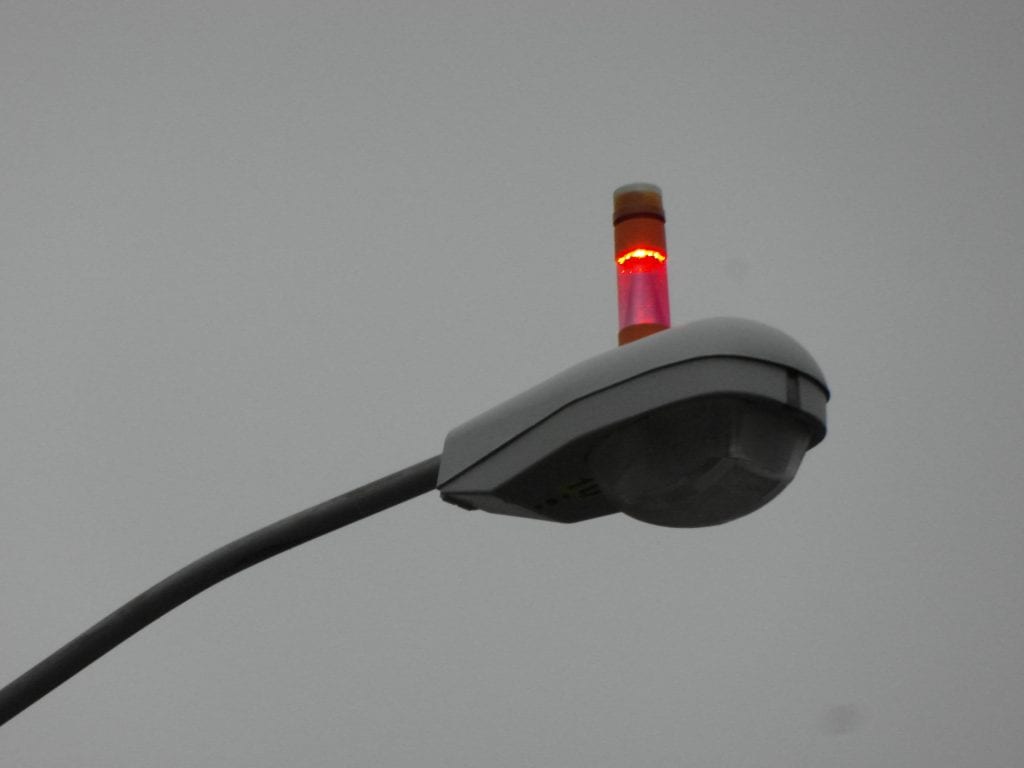
These lights are intended to serve as guides for citizens in search of emergency callboxes. If you see a building on fire or witness a vehicular accident, and if you have no other means at hand to report the incident, then looking up might help guide you to a red emergency callbox.
These lights drew attention some years ago when the bulbs were switched from halogen light bulbs to LED, costing the city a fair amount of money at the time with promises of energy-efficiency savings in the future.
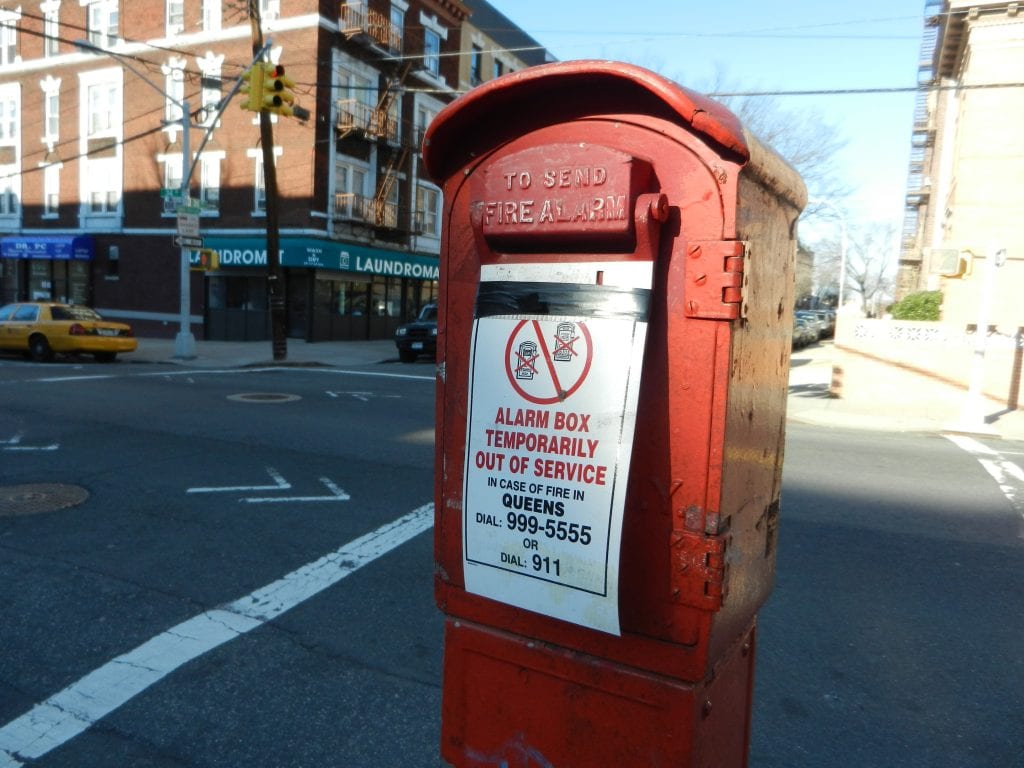
Occasionally I spot a notice taped to a callbox announcing the device’s impotence. This seems to confirm that the callboxes are, in fact, inspected on a regular basis.
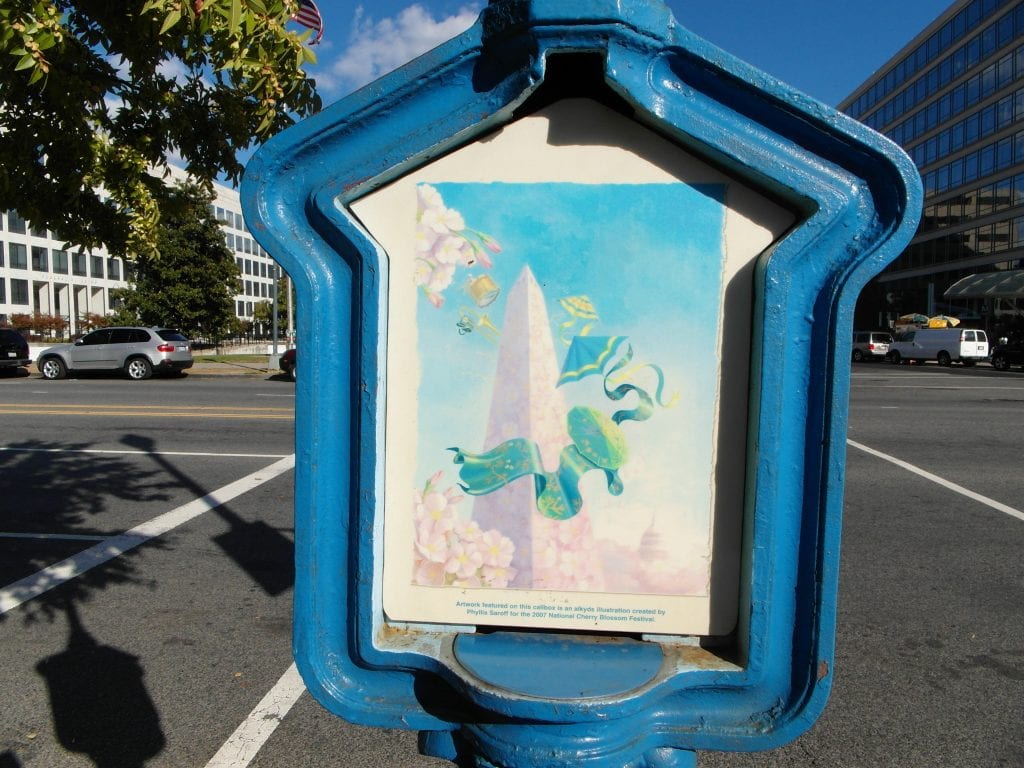
Other cities have callboxes, though I don’t know how they manage them or if the boxes are maintained. In Washington, D.C., a few months ago I noticed that the District appears to have entirely removed its callboxes from service, inviting artists to beautify some of them for posterity.
Occasionally I’ll see similar attempts in New York to dignify these old boxes. Someone lovingly adorned this Jackson Heights BARS box with gold and red paint:
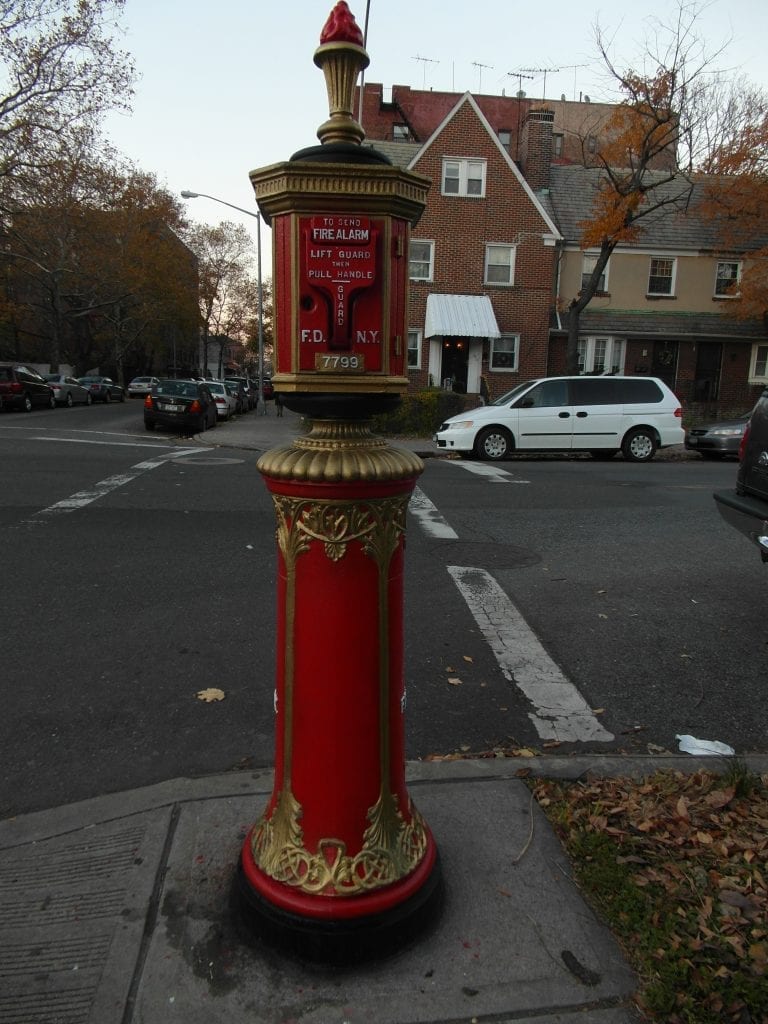
I don’t know if this particular effort was sanctioned by the city or if it is art-vandalism.