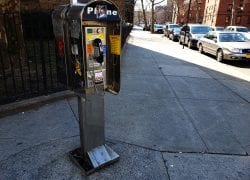
These back-to-back payphones at the Queensbridge Houses in Long Island City have some special meaning to me, on account of the circumstances under which I found them.
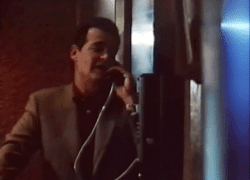
Payphones make a couple of appearances in "The Glitter Dome". The second scene is more interesting for its demonstration of an element of bar and payphone culture that has pretty well completely vanished.
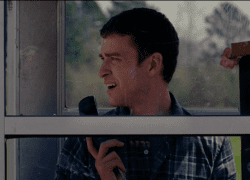
A mildly intriguing phone booth scene from an unremarkable movie had me asking more questions about payphones than about the storyline unfolding on the screen.
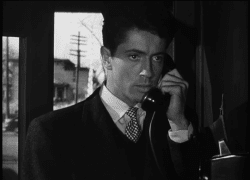
This scene doesn't seem like much but it does play a pretty important part in the overall plot of Hitchcock's film released in 1951.
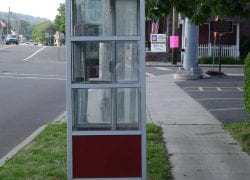
New York photos from a photographer who shares the same fascination with payphones and phone booths as I.
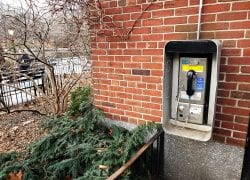
Of about a dozen or so payphones scattered throughout Central Park this one, at the Model Boat Sailing place, was the last one that worked.
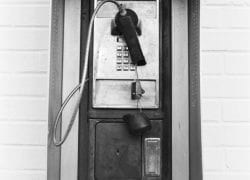
Daniel Hopsicker has been taking pictures of payphones for a long time. Now he's sharing some of his work with The Payphone Project.
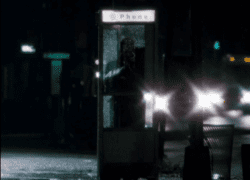
The phone booth scene from "9½ Weeks" leaves viewers more with the idea of the phone booth, not its haunting visual image. But then Kim Basinger is a lot more interesting to look at than a phone booth.
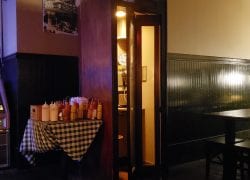
Something really does ignite in me when I encounter old wood phone booths like this one in Ridgewood, Queens.
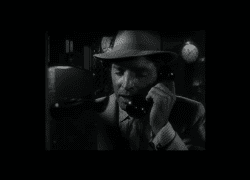
Vestiges of payphone behavior from an earlier generation are seen in this set of excerpts from "Sorry Wrong Number", a 1948 noir-like thriller starring Barbara Stanwyck and Bert Lancaster.
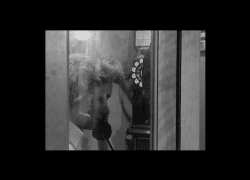
Barbara Baxley makes a phone call in the 1960 film "The Savage Eye".
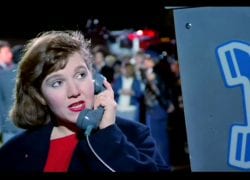
Not a particularly remarkable appearance of a payphone in "The Big Easy" from 1986.
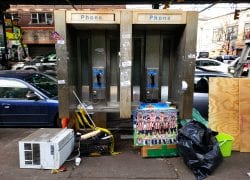
An air conditioner. A football club. A bag of garbage. A green bucket. Oh, and a couple of working payphones in Corona, Queens.
Development work at Penn Station has forced removal of about a ½ dozen working payphones. One of these phones was among my most-used devices to record sounds of nearby subway buskers, like Shobo Kubo and others.
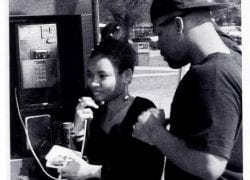
Phone booth hunting in publicly posted college and high school yearbooks turned up some interesting stuff. Until the mid-2000s, if not beyond, most high school and college campuses had payphones of some sort, so their appearance in yearbooks seemed like a sure thing.
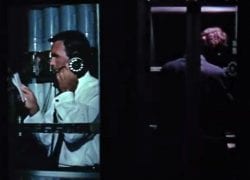
I felt a little duped by this film. I stuck with this movie because I figured a serial killer flick from the 1960s had to have at least one payphone or phone booth scene. Here it is.
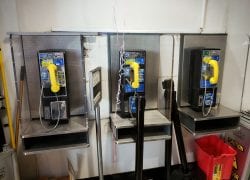
The payphone room at NYU Langone's Tisch Hospital today functions as more of a broom closet than a place to make a phone call. Not only did one of these phones actually work, but its volume control button did as well. That's rare.
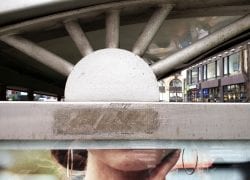
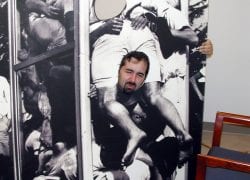
I own a two-heads-missing print of Jim Munroe's famous phone booth stuffing photo from 1959. My friend Chad Dickerson and I knew exactly what to do with it one night at the Time & Life Building in September, 2000.
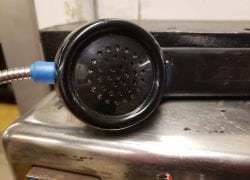
I picked up a payphone and let it listen to the sweet sounds of Shogo Kubo, whose guitar stylings frequently grace New York's Penn Station.
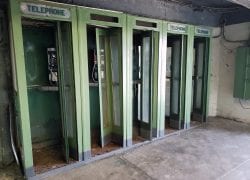
Checked in on an old favorite today: The rotting, festering phone booths at the 79th Street Boat Basin. This is the green-colored style of booth seen in "Panic In Needle Park", "Midnight Cowboy", and other 1970s-era films made in New York. I don't know of any other booths like this in the wild today.
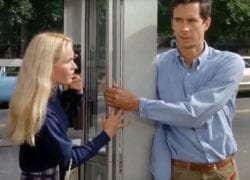
There is a distinct tongue motif in this film. Look for it at 2:50 & 2:57 in this clip.
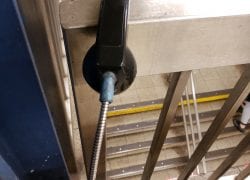
I canvassed the Broadway/Lafayette BDFM and Bleecker Street 6 subway stations for payphones. This is what I saw. This is what I heard.
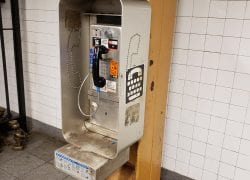
I've used this payphone a number of times in attempts to record nearby subway musicians, rarely if ever with any luck.
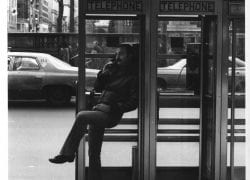
Should I recognize the dude in this picture? It appears to be the work of a professional photographer, Thomas J. Rodriguez. So who's the guy in the phone booth? And why is the print a mirror image?
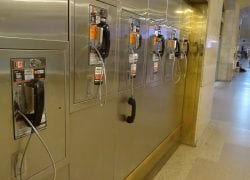
Most of Grand Central Terminal's payphones were routed last year. Take a tour of how they looked, pick up some payphone trivia that might be new to you, and learn where you can find the last surviving payphones at Grand Central.
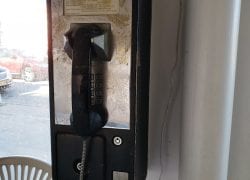
I found an abandoned "Smart" pay telephone hiding inside a laundromat on Corona Avenue in Elmhurst, Queens.
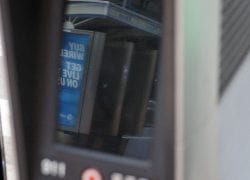
Non-working LinkNYC kiosk tablets make for interesting reflective surfaces as the city passes by.