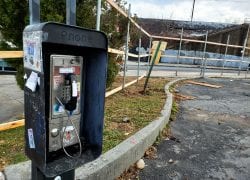
The far end of the parking lot at an abandoned Sports Authority in Long Island City was, truth be told, a really cool place to make a phone call.
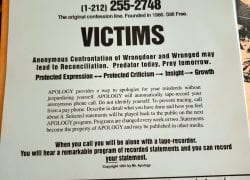
Certain phone numbers are iconic in my life. 212-255-2748 is one such number.
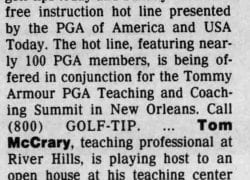
Is the (800) GOLF-TIP mystery really all that mysterious? I suspect one very likely culprit: The Professional Golfers Association.

There are no public telephones of any kind on the new Kosciuszko Bridge. If anything bad happens you should hope your cell phone works.

An overheard recitation of one woman's phone number inspired a brief attempt at letting her know she left a lot more up for grabs than just that.
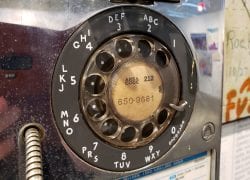
Just some deliberately vague comments about a coveted phone number I recently acquired, with discussion of how to make sense of online phone number lookup resources.
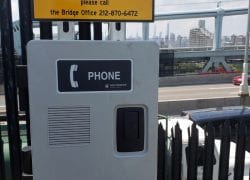
A memorable encounter with the NYPD on the RFK/Triborough Bridge pedestrian path revolved around that crisis prevention/suicide counseling telephone I helped get installed in August. I am still processing the meaning behind the machinations.
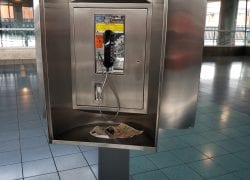
A trip to Staten Island turned up a surprising quantity of working payphones at the St. George Terminal. I found 11 phones in all, and at some point in the past there would have been as many as 24. I imagine the ferry boats themselves may have had payphones on board at some point.

Development work at Penn Station has forced removal of about a ½ dozen working payphones. One of these phones was among my most-used devices to record sounds of nearby subway buskers, like Shobo Kubo and others.
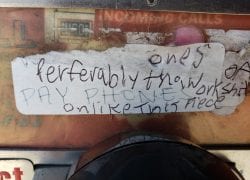
The "WE NEED MORE PAY PHONES" vandal is not alone in feeling the absence of traditional public telephones. Once in a while the vandal gets affirmative feedback, demonstrating that others among us feel the wholesale routing of all public telephones is a step too far.
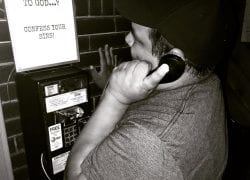
There is a "Payphone To God" at a bar in Chicago. Also, notes on payphone-centric projects such as Futel, Mind Dial, and Recalling 1993.
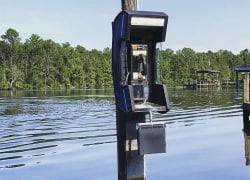
A photo of an unusually-located payphone on a Florida lake inspired me to verify its authenticity, and to follow up on another payphone-on-the-water question I raised a few years ago.
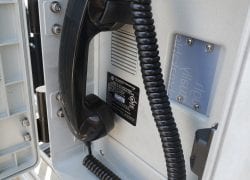
My thanks to THE CITY, and Gabriel Sandoval, for amplifying my long-running concerns about the lack of a suicide counselling hotline telephone on the RFK (née) Triborough Bridge. I could hardly believe my eyes when I found a crew of MTA workers installing the device last week.
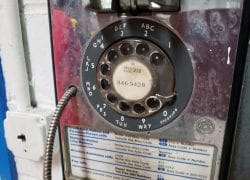
I got over my fear of being ridiculed for asking about such things. I staked out an old rotary dial payphone at an NYC eatery, asking permission first of a cashier, then of the store's manager, to enter into a strcture marked "Employees Only". . The cashier responded with the predicted dismissive "No." She was overruled. The manager had no problem with it.
Inspired by new contacts with an interest in the subject, I wrote down some reflections on my involvement with the Apology Line in 1993 and 1994. I also dug up some of the paperwork from that project I still have on hand, including the stickers I printed and the magazine I helped create.
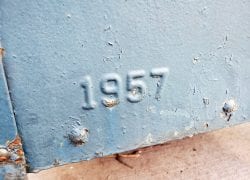
It's not that mailboxes are vanishing. Instead we are losing distinct stamps of age that showed how some humble little USPS dropboxes had been in place since the Eisenhower administration.
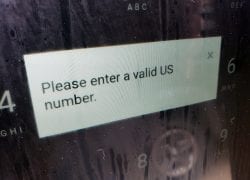
Access to 211, a community outreach service provided by the United Way, has been hijacked on a significant quantity of CityBridge payphones. Calls to 211 now connect to services promising gift vouchers and free vacations in exchange for taking a survey.
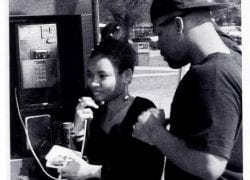
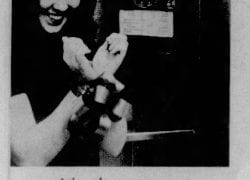
Phone booth hunting in publicly posted college and high school yearbooks turned up some interesting stuff. Until the mid-2000s, if not beyond, most high school and college campuses had payphones of some sort, so their appearance in yearbooks seemed like a sure thing.
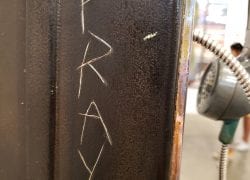
It may not have been authentic PRAY, but I appreciated seeing one of my all-time New York City heroes get some respect at a Brooklyn street art exhibit.
LinkNYC's loudspeaker interface erases some of the most common maintenance headaches of the traditional payphones. But at what cost?
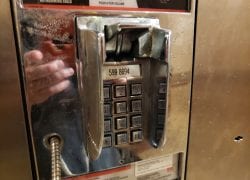
PTS's New York City payphones have been known to not work for months on end before coming back alive. This time it feels different, at least with regard to the company's payphones at Grand Central Terminal. I fear the end is nigh for public telephones at the Terminal.
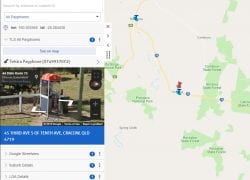
Australia's 1800 payphones now allow for incoming calls. Combine that with Telstra's Australia Payphone Locator and I came up with a recipe for randomness.
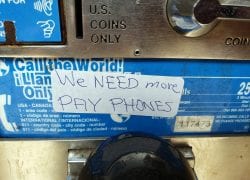
Whatever I might think of the means I have to respect the determination and hand-crafted work of whoever keeps placing "WE NEED MORE PAY PHONES" stickers on NYC's payphones hither and yon.
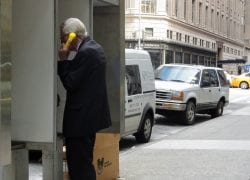
In my never-ending quest for new ways to be ignored I have applied for the job of Franchise Inspector at DoITT, the City agency that administers LinkNYC and the old payphones. I don't think I have a chance, but here are some tips for whoever gets what should be my job.
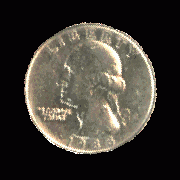
Now I know what happens when you a New York City payphone swallows your quarter. It keeps it. Or rather CityBridge, the owner of all outdoor payphones in the city, Keeps the change. It cannot be much of a cash cow but it seems fair to ask where that free money goes.
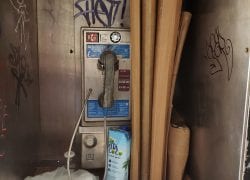
A couple of unrelated encounters on a Sunday afternoon proved once again (not that it was ever lost on me) that people other than me still use payphones.
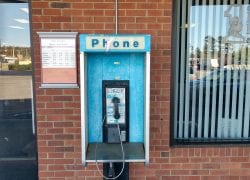
So what if it's a longshot? If this actually connects it would be pretty cool. Anyone in the vicinity of Winnsboro, South Carolina, is welcome to take away a couple of old payphones, at no charge, so long as you have the ability to remove them. Click for details and contact info.
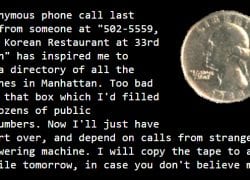
I found evidence of the day this website was born. It appears to have occurred either after midnight on December 5, 1995, or else on December 6. This posting from one of my earliest websites makes it look like I started writing the night of December 4, then kept on writing until after midnight. The filename…