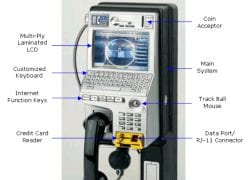
By today's standards the short-lived iSpectrum looks like a toy. But the ingenuity of actually upgrading existing payphone hardware instead of throwing it away is something the Smart City Could have given more consideration when it "reinvented" the payphone.
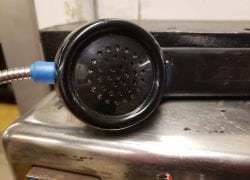
I picked up a payphone and let it listen to the sweet sounds of Shogo Kubo, whose guitar stylings frequently grace New York's Penn Station.
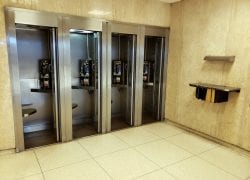
People make fun of me for my otaku-like fixation but when I found these old beauties last week I felt like a kid in a candy shop.
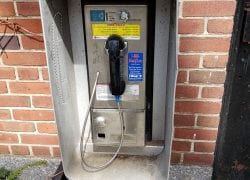
A woman saw me putting coins into a payphone and offered me use of her cell phone. I declined, resisting a faint impulse to explain myself.
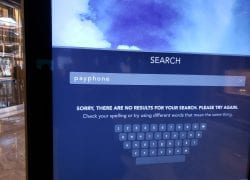
No payphones for you at the new Hudson Yards. But why did my camera not work when I tried to take a picture of one of the facility's kiosks? Smart City beacons/sensors run amok?
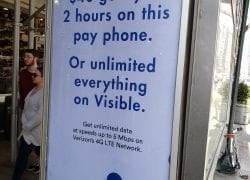
A new phone company's ad campaign includes a shoutout to payphone users. But does their math add up? I don't think so.
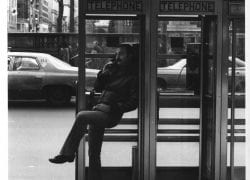
Should I recognize the dude in this picture? It appears to be the work of a professional photographer, Thomas J. Rodriguez. So who's the guy in the phone booth? And why is the print a mirror image?
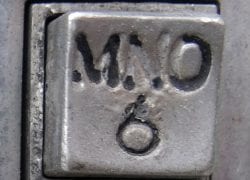
The font used on this set of touchtone buttons is nothing special in and of itself. But I felt the rugged, weathered quality of these little buttons, punched poked and pounded for however many years, made them worth singling out.
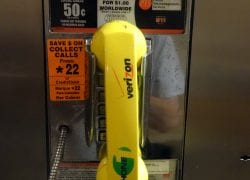
A nickel and an incremental hunch led me to what might be the most entertainment you can get in New York for a nickel.
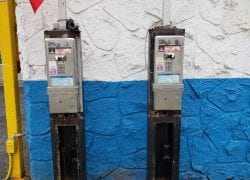
A few weeks ago I needed a pay phone. Really, I did. I had to call somebody without all of Queens Boulevard hearing both sides of the conversation.
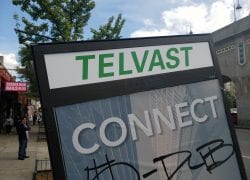
I never heard of TELVAST until its name surfaced on a Queens Boulevard payphone. I found no trace of the company's existence in online or offline resources. Putting it up for grabs here in case anyone knows anything about the company or the word itself.
I was honored to accept an invitation from Joey Skaggs to guest post on his blog, "Art of the Prank". In response I sent a succinct account of how my LinkNYC/Mr. Softee social media engineering project bewildered millions.
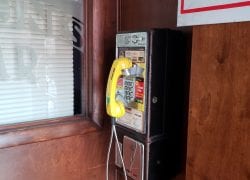
An abandoned Verizon payphone at a Woodside bar illustrates what a sorry job the telco giant did in cleaning up after itself upon exiting the business. Countless quantities of Verizon's dead payphones lurk in places like Pasiones Bar.
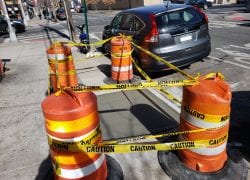
It looks like CityBridge now removes payphones and moves on, replacing them not with the Smart City LinkNYC kiosks but with empty squares of pavement. Is it asking too much for CityBridge to post a heads up announcement informing the public that a payphone they know will soon go away?
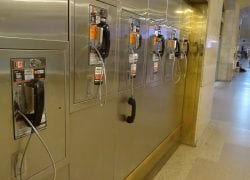
Most of Grand Central Terminal's payphones were routed last year. Take a tour of how they looked, pick up some payphone trivia that might be new to you, and learn where you can find the last surviving payphones at Grand Central.
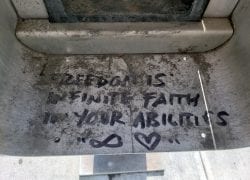
Sometimes inspirational graffiti makes sense. Not this time. Not to me at least.
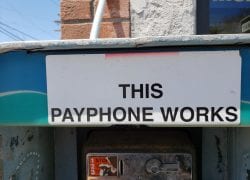
A quick tour of a NewTel payphone on Kennedy Boulevard in Union City, NJ.
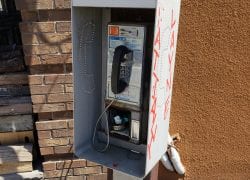
This phone, outside JD's Smoke Pit and Boiling Pot in Fort Lee, NJ, was abandoned over 18 years ago by a defunct company named Jupiter Payphones, Inc.
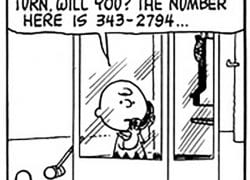
I was reading up on how telephone numbers in movies usually have 555 as the exchange. From this I learned a little bit of Charlie Brown trivia that was new to me.
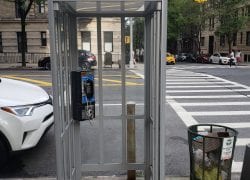
This week I had a chance to check in again the the Canadian-style phone booths CityBridge used to replace authentic American Airlight models on West End Avenue a couple of years ago. One booth is gone, and only one allows the promised free phone calls within the 5 boroughs.
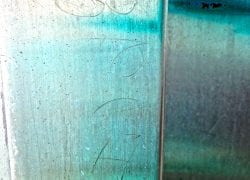
There is more religion on the upper east side and other parts of New York than most people realize. The messages are virtually subliminal, hidden in the contours of payphone enclosures.
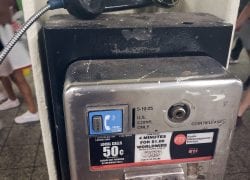
You wouldn't think it from the looks of this old thing but a beaten-up payphone at the Times Square subway station actually works. I used it to make a one-way call. Listen in.
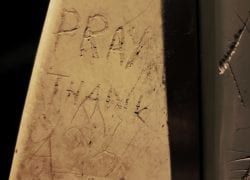
PRAY spotting might have me working the D train into my commute.
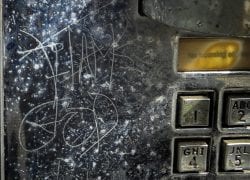
It's hard to see but it is there. It is one of a few recent sightings of a religious exhortation etched onto a payphone enclosure that could date back to the 1980s. Was this the work of PRAY, the legendary scratchiti artist?
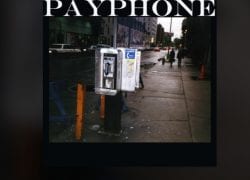
I used to take umbrage when other entities used my photos or content without permission. But it's happened so often over time that I can hardly find the energy to even contact those responsible to ask for nothing more than a citation and/or a link.
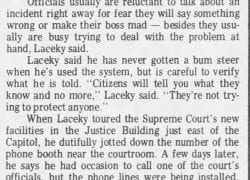
I spotted this interesting story from 1982 about Tom Laceky, an AP reporter who made the papers on account of calling payphones to gather information about developing stories.
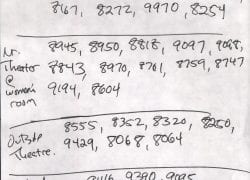
These scraps of paper from 1999 or 2000 appeared from my boxloads of papryal ephemera today, reminding me how obsessively I used to write down payphone numbers.
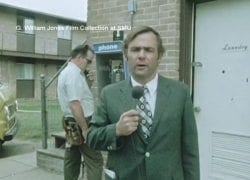
An amusing look back at when the cost of a payphone call increased from 10¢ to 25¢, from WFAA in Dallas.