
I did a short interview yesterday with Channel 9, an NBC affiliate in Denver, on the occasion of anniversary of the pay telephone. Allegedly the first pay station appeared in New Haven, CT, on June 1, 1880. Certain evidence, however, suggests earlier pay stations had existed.

This haiku-like New York Telephone advertisement from the New York Times, June 13, 1906, shows that stigmas associated with payphone usage date back to the early 20th century.

The "Payphone of the Future" is here: Put your recyclables aside and settle down at your nearest LinkNYC device.

My first thought on hearing that the Met Breuer was taking over the old Whitney building was, naturally enough, “What will they do with the phone booths in the basement?” I am sure this was the question all New Yorkers asked when they heard about the Met Breuer opening.

Links appear to be a breeding ground for the 21st century version of people hanging around by the payphone. New behaviors of loitering and noise beg an obvious question: When will the complaints begin?

In this year of 2016 it is surprising to find fresh payphone installations, even in a type of place where you might actually expect to find them. New York’s Penn Station recently set up new payphone installations throughout the concourse area.

An abandoned payphone in Queens bears an interesting notice which claims that the phone is marked with something called "Tracekit", a permanent tracing system used by law enforcement. Did Tracekit really exist?

Taken at the Masters Golf Club in Augusta, Georgia, the photo shows several individuals using what appear to be two banks of public pay telephones.

A long time ago, from a payphone not so far away, I did a radio interview completely forgotten to me until last week. A round of Spring cleaning turned up a copy of the BBC's Alan Dein interviewing me for “Don’t Hang Up”.

The best way to be heard and clearly understood when placing a call through a Link is to yell. That appears to be what happened in this audio capture, where a LinkNYC enthusiast encountered one of the devices.

It is illegal to spoof CallerID info “with the intent to defraud, cause harm, or wrongly obtain anything of value.” It is hard to imagine that CityBridge itself has any malicious intentions by spoofing CallerID from its Links, but the shield of anonymity now offered by these devices could make them an attractive resource for those who do.

Despite overblown privacy concerns people really are using these things. If you want to try one yourself it's looking like you might have to wait in line, just like the old days of the payphone hog.
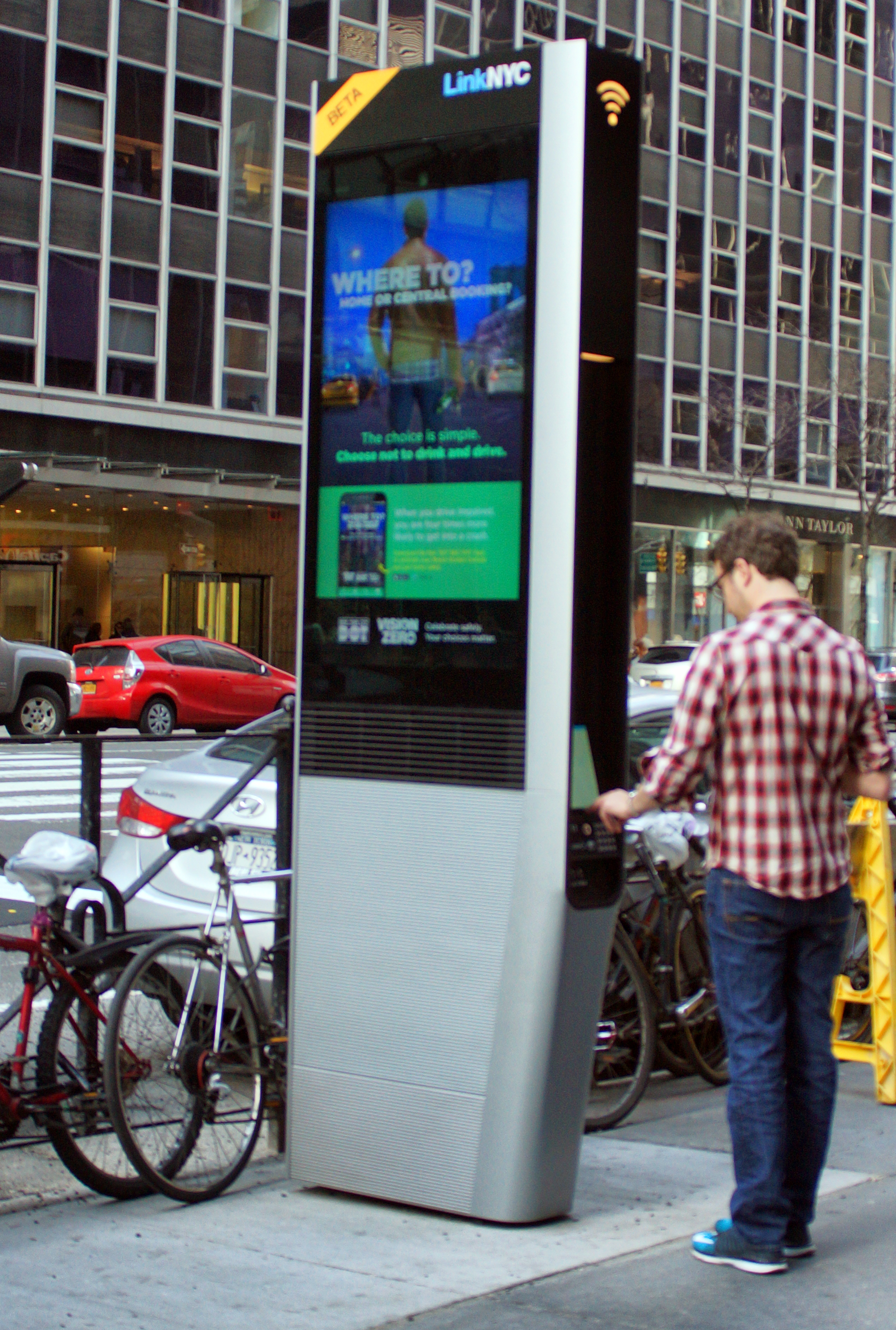
Links, expected to replace most of New York City's outdoor payphones, are rising fast on Third Avenue and Eighth Avenue in Manhattan. Most of them do not work yet but that's OK. They're BETA.

I have used CityBridge’s Link devices a number of times since they went into active service a few weeks ago. My primary interest has been their ability to make phone calls. It turns out the “free phone calls” feature is worth about what I paid to use it.

It would be surprising if no one thought to find a home for this British style red phone box located at the service entrance for 437 Madison Avenue. I bet the folks at Citybridge would have considered putting a real working payphone in this sucker.

It seems inevitable that telephonic conspirators will use Links as back doors into public space, turning them into platforms for propaganda or even malicious pursuits. Links could effectively function as megaphones.

Once in a while in my research a charming cultural relic surfaces, such as this peppy New York Telephone commercial from 1987. This 60-second television spot shows several actors recreating real-world scenes of people using payphones in ways once common in New York.

This payphone was at the center of what was (to me, at least) a very amusing incident which occurred during the last week of December, 2015.

Rogue payphone sightings in New York have become quite rare. I spotted this on in Brooklyn a few weeks ago.

Houston, Texas, boasts the nation's 2nd largest payphone population. A StreetView tour shows areas where they can be found every couple of blocks.

This mysteriously shrouded rectangle is all we get to see for now of the first Links, the free WiFi hotspots and multipurpose digital depots expected to replace thousands of NYC's outdoor payphones.

Signs throughout the Bronx Zoo promise its visitors public telephones in a number of locations. Lies, all of them. There are no payphones anywhere at the Bronx Zoo, contrary to signs like this one which promises a payphone at section B5, aka the Dancing Crane Plaza. I did not have time to case the entire place. On…

Whenever I hear a subway busker or street musician performing I look for the nearest payphone. If one is nearby, and if it works, I call a number to leave a recording of the sound. It is a very hit-or-miss pursuit with a lot of wasted quarters.

“Hang Up”, the New York City payphone documentary to which I contributed, is now viewable on the public Internet for the first time since its premiere last year. I attended the first public showings of “Hang Up” in NYC theaters. Once I got over the gobsmacked weirdness of seeing my aging face on a gigantic movie screen…
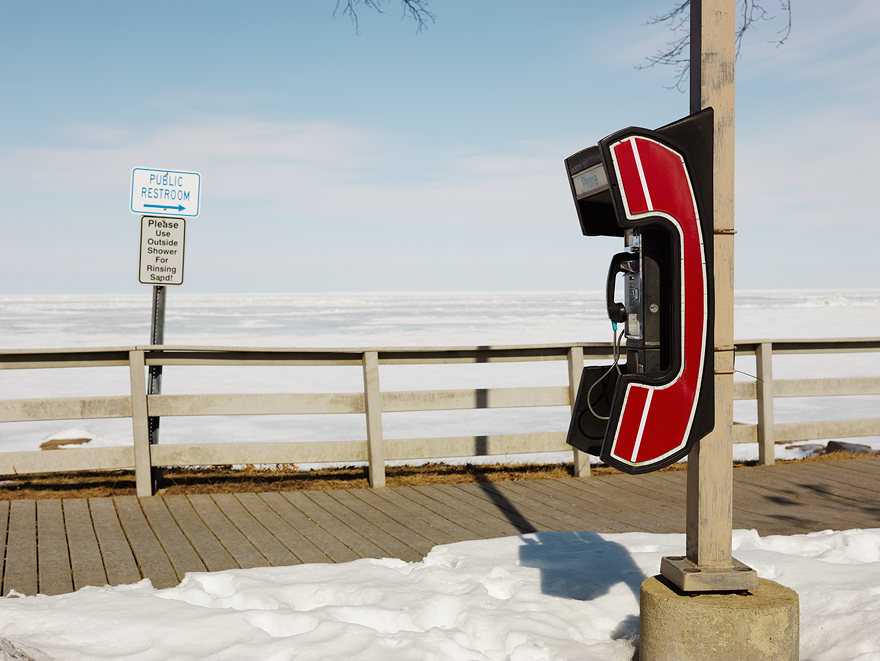
Josef Hoflehner's photo, taken this calendar year, shows a living, breathing, dial-tone-enabled payphone on a snow-caked boardwalk of Lake Erie, Ohio.

Mark Dent at BillyPenn.com penned a nicely done piece on the surprising quantity of payphones actively in service in Philadelphia. I visited Philadelphia some months ago and remember being somewhat surprised at how easy it was to find payphones there. I even spotted a couple of people using payphones. Sightings of people using payphones are…

Pundits and techies pounced on the appearance of a flip phone in the video for Adele’s latest song “Hello”, calling it all kinds of ridiculous. According to director Xavier Dolan, however, it is the grizzled, overgrown British K2 phone box which appears later in the video that has far more significance.

Deep within the bowels of the world largest building (the Boeing Everett Factory in Washington) one finds a surprise: An old-style phone booth with a fully functional payphone that accepts incoming calls. Call it at 425-347-9966.